The library
Articles
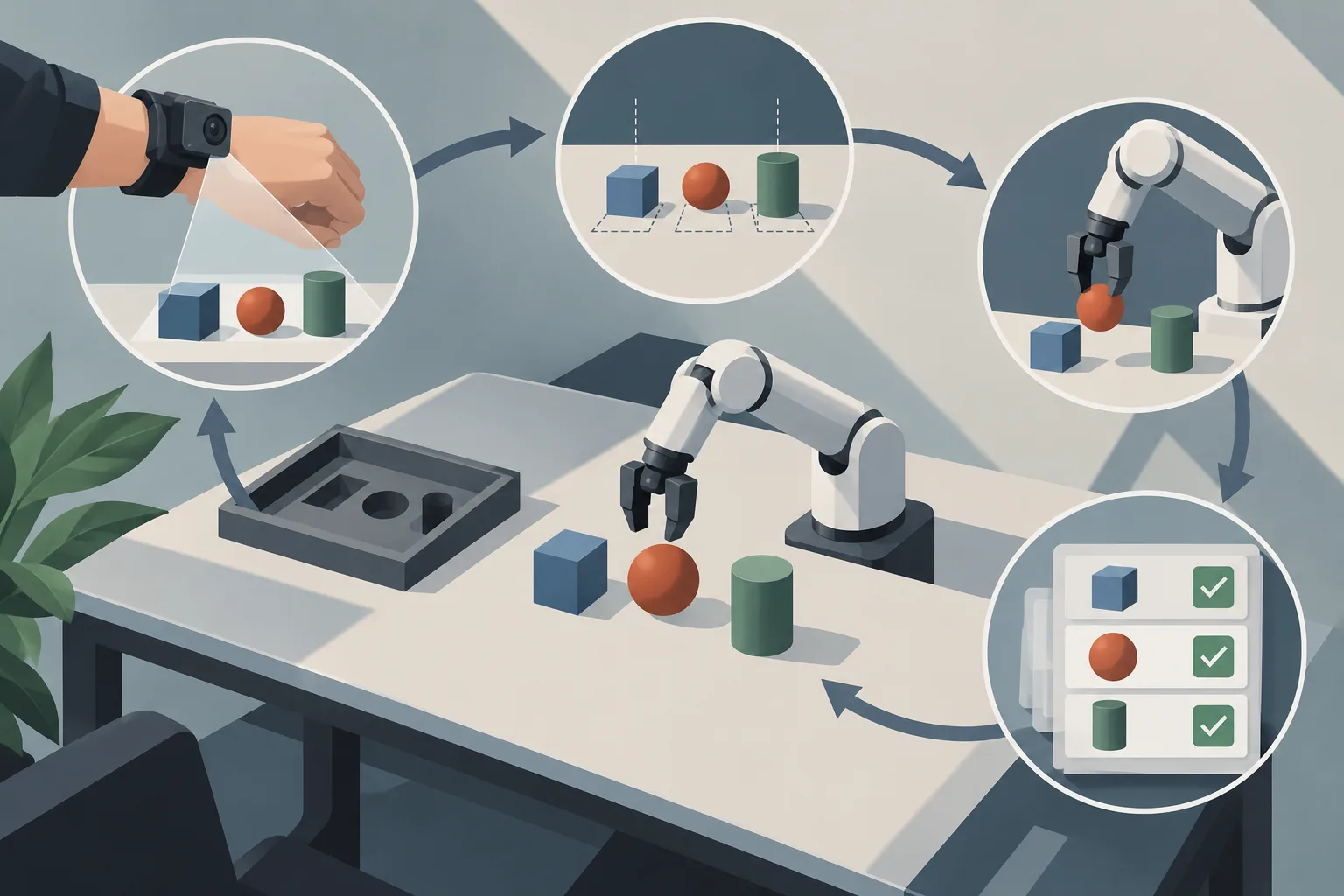
What a Real-Robot Test Must Control from Reset to Result
The admitted excerpts support coordinating data collection, scene reset, policy execution, result logging, and task-factor analysis, while using success classifiers and reset policies as mechanisms for repeatable trials; they do not provide a complete implementation recipe.
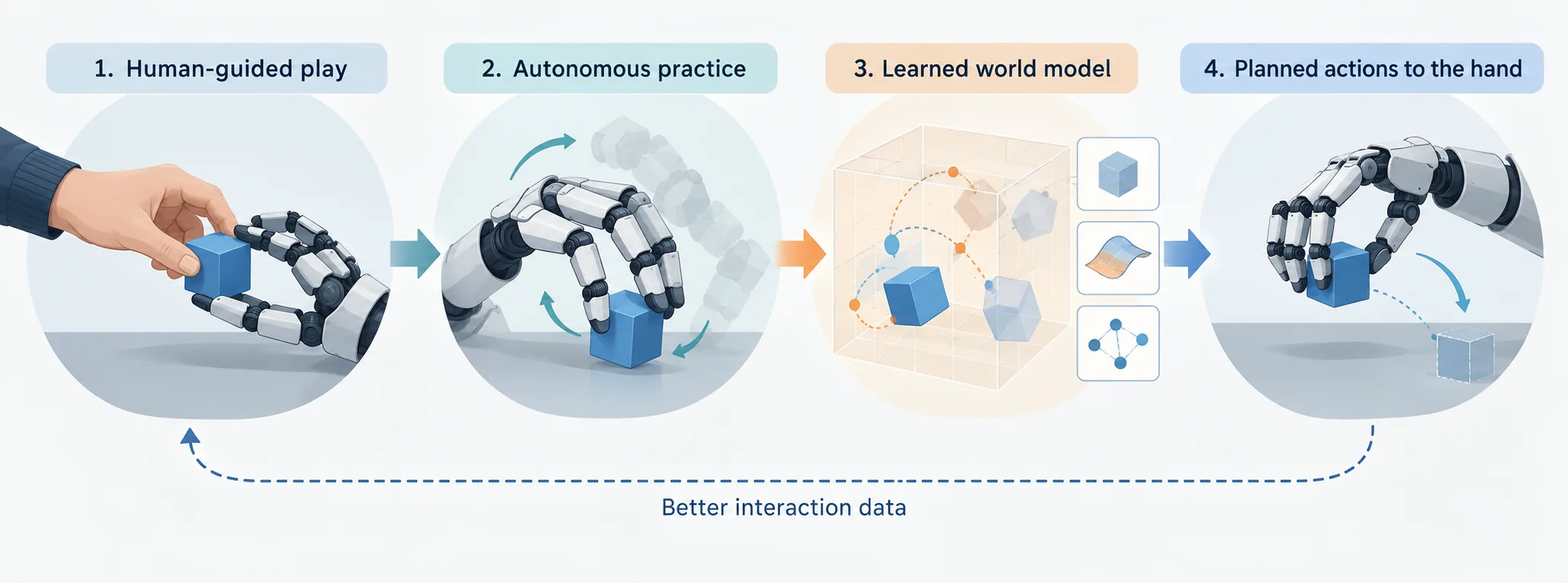
From Guided Play to Autonomous Dexterous Practice
DSP behavior-clones a robot play policy from minutes of human-guided activity, deploys it to collect hours of interaction data, and trains a world model for planning and self-play policy distillation. Its authors report physical-robot results on pushing and in-hand reorientation, including a 69.6% success-rate advantage over hindsight behavior cloning and comparable success to reinforcement learning with 490 times less interaction data.
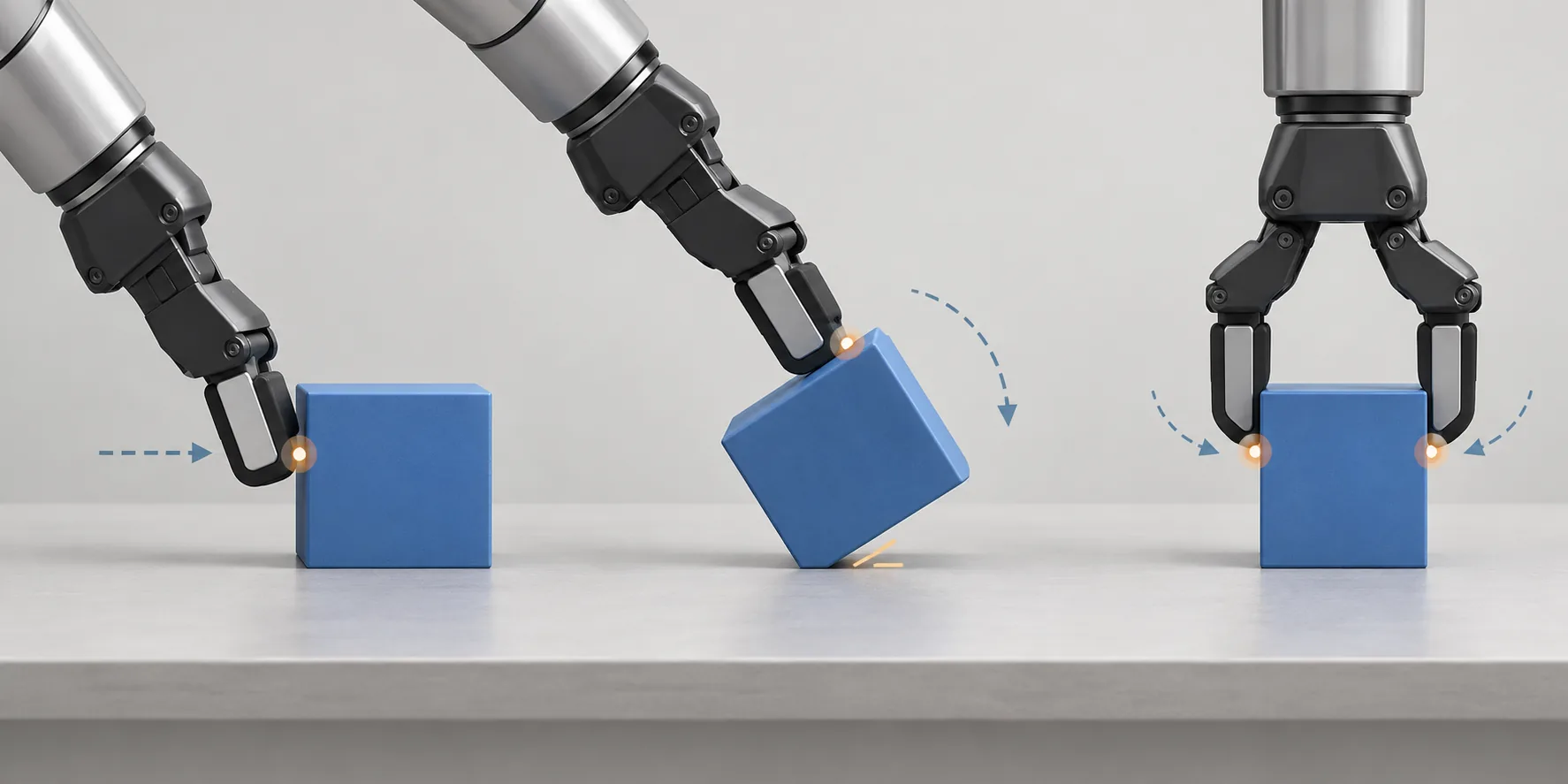
Uni-PNP: Unified Prehensile and Non-prehensile Policy Learning
Uni-PNP learns a unified object-pose-reaching policy by modeling contact-induced motion and progressing from graspable to ungraspable objects during reinforcement learning. Its authors report gains on seen and unseen objects, while providing only an unspecified claim of real-world transfer in the available abstract.
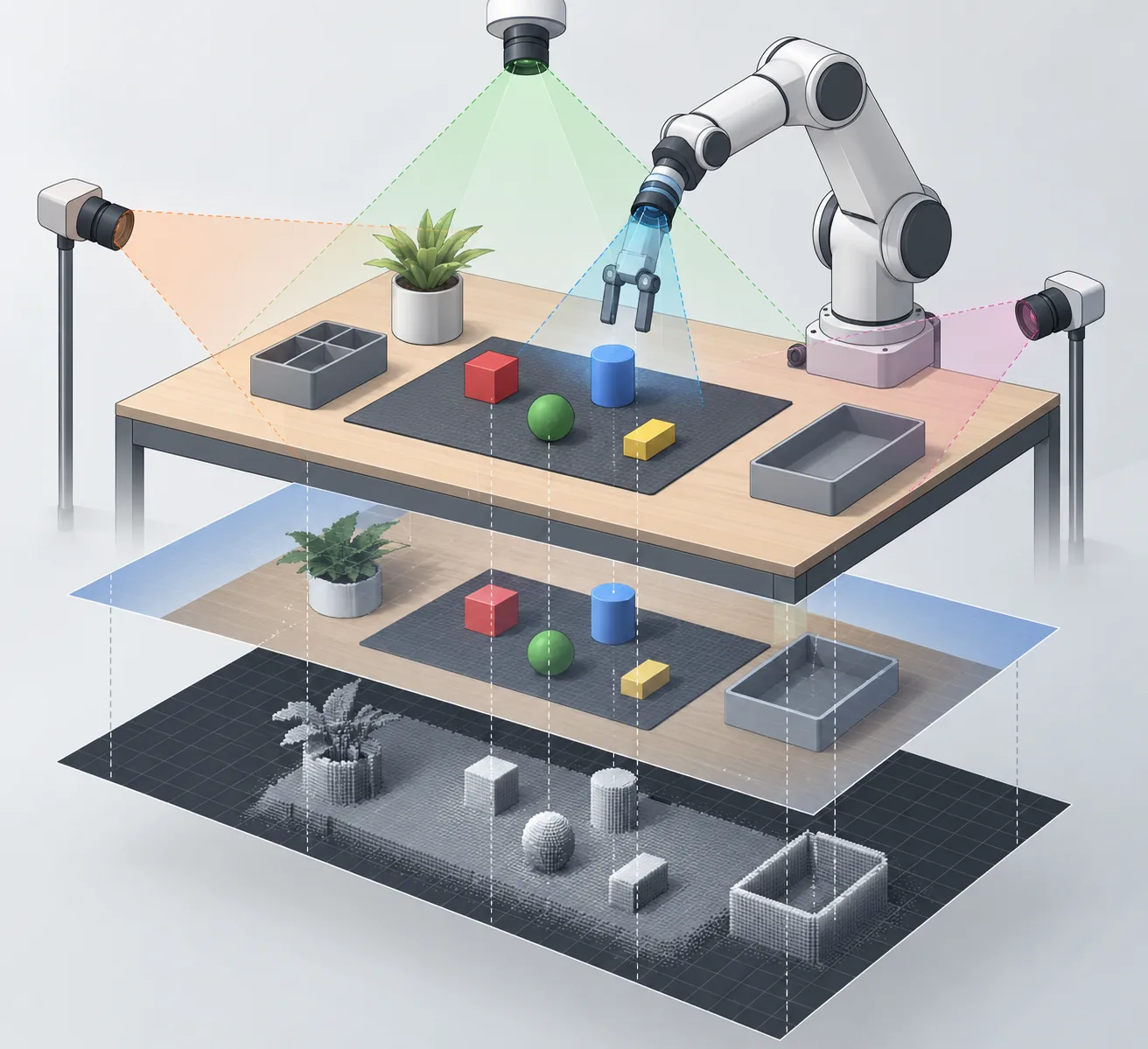
How One Robot Dataset Represents RGB and Depth
In the LeRobot demo dataset, RGB observations have shape `(height, width, 4)`, use `numpy.uint8`, range from 0 to 255, and have resolutions of 720 × 720 for the head camera and 480 × 480 for wrist cameras. Linear depth measures the distance from the camera to scene geometry, has shape `(height, width)`, uses `numpy.float32`, ranges from 0 to 10 meters, and is stored in videos that are log-quantized during replay and then dequantized to metric depth values.
Replay Archive or Structured Demonstrations?
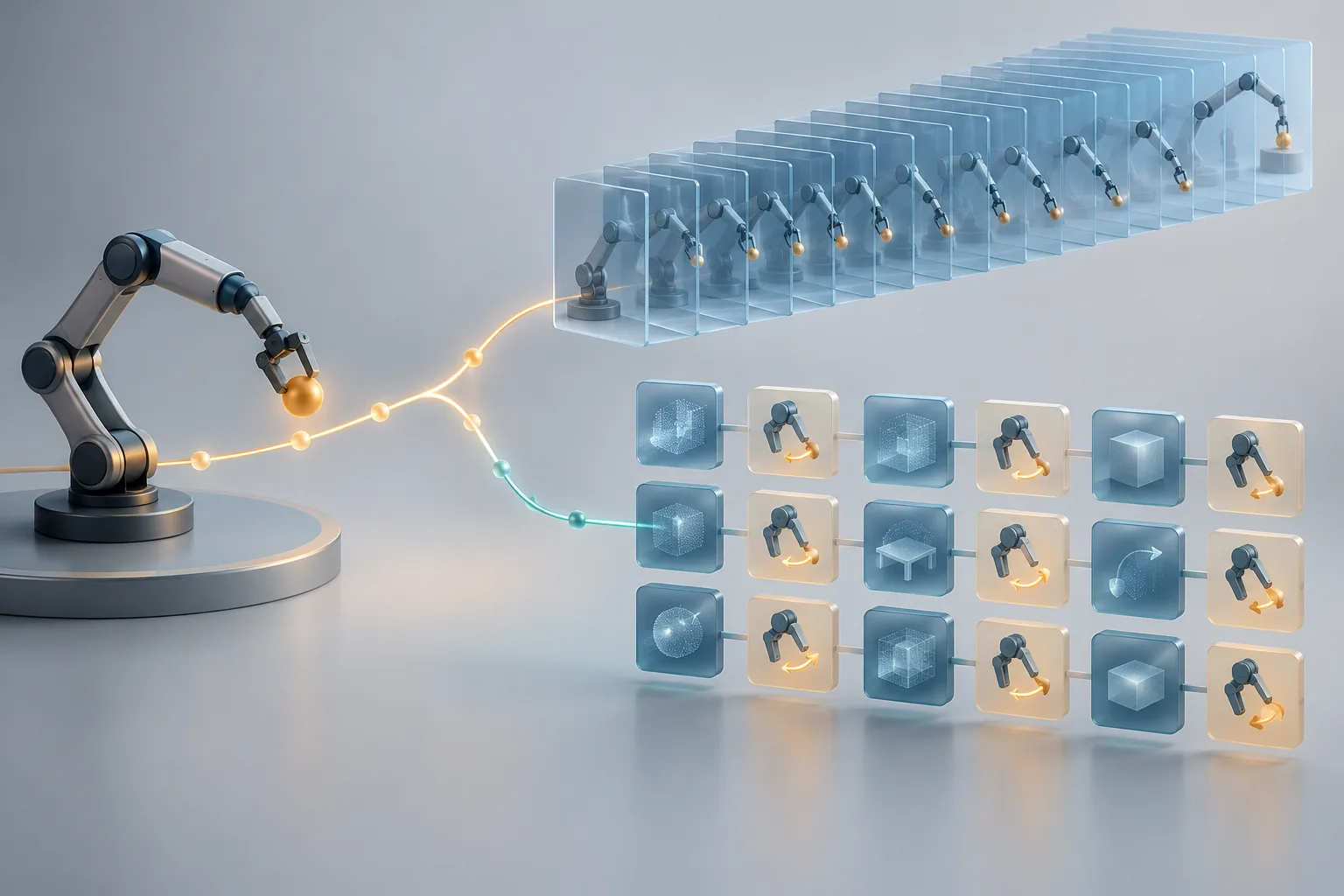
Raw HDF5 files retain the information required for exact trajectory replay in OmniGibson and for collecting additional visual observations. The corresponding LeRobot release presents 20,000 demonstrations across 100 tasks in a customized LeRobot V3 structure with documented RGB and depth data.
How Unequal Robot Fingers Become Both Feet and Tools
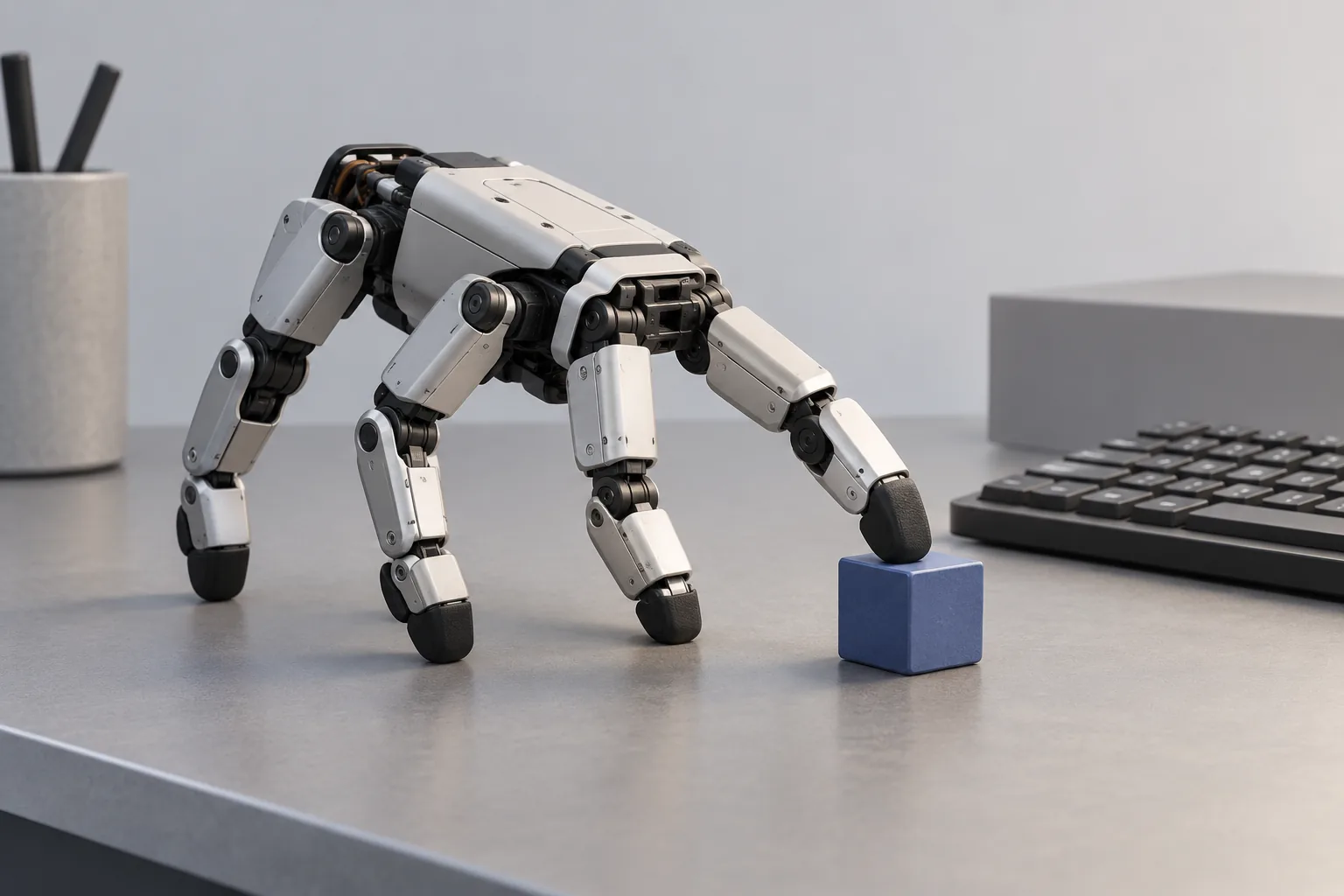
A reinforcement-learning approach coordinates an anthropomorphic hand’s unequal fingers for self-support and locomotion without changing their design. The authors separately report simulated speed gains and physical demonstrations of untethered movement, recovery, keyboard input and visually guided object pushing.