How Robots LearnGuides

Learning, explained and examined

How robots learn.

How Robots Learn explains the data, methods and evidence behind robot learning, from demonstrations and simulation to real-world evaluation.

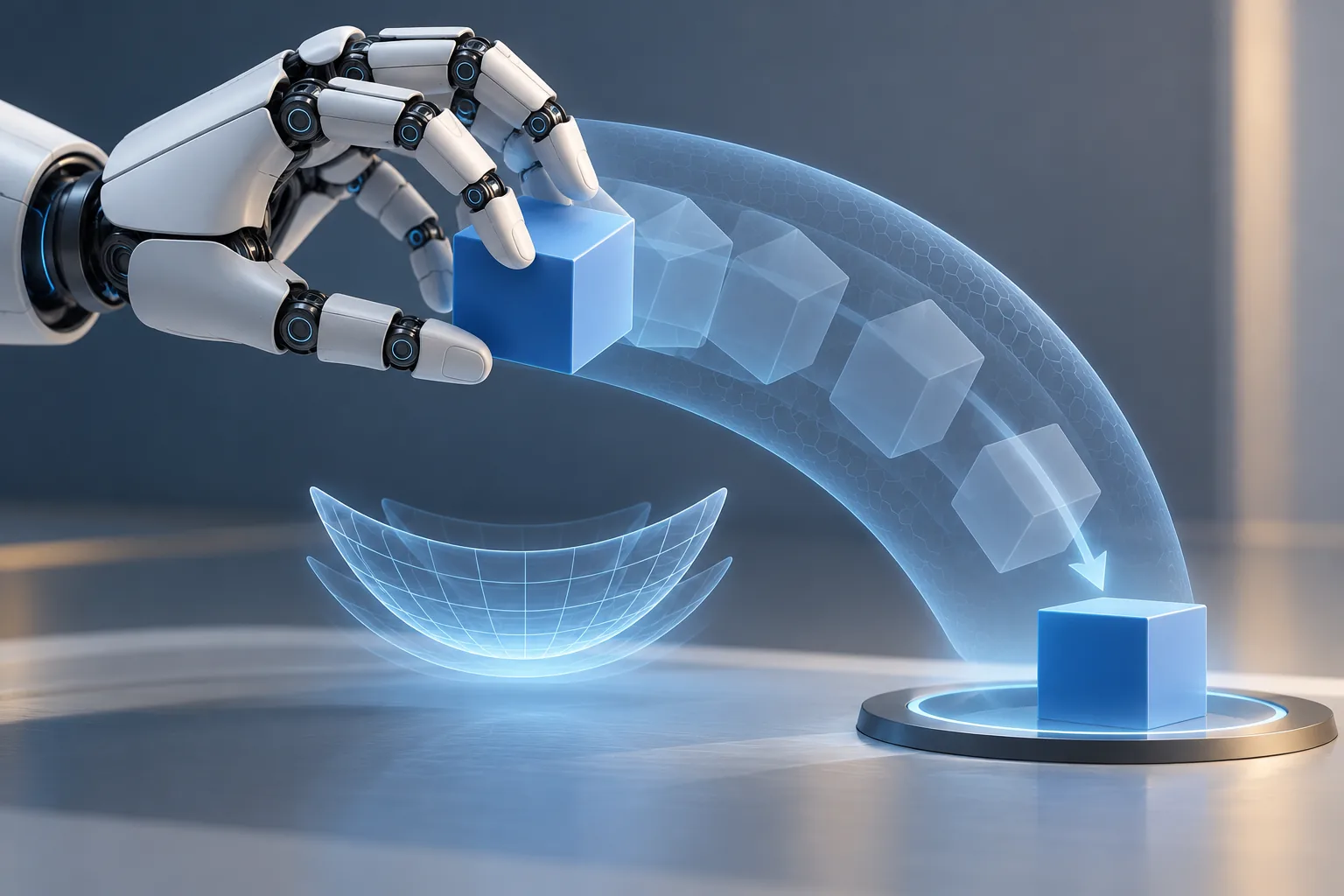
A robotic hand reorienting an object while goal attainment and drop prevention appear as separate visual outcomes

Reliability and safety

What Separate Goal and Drop Metrics Showed in LEAP-Hand Tests

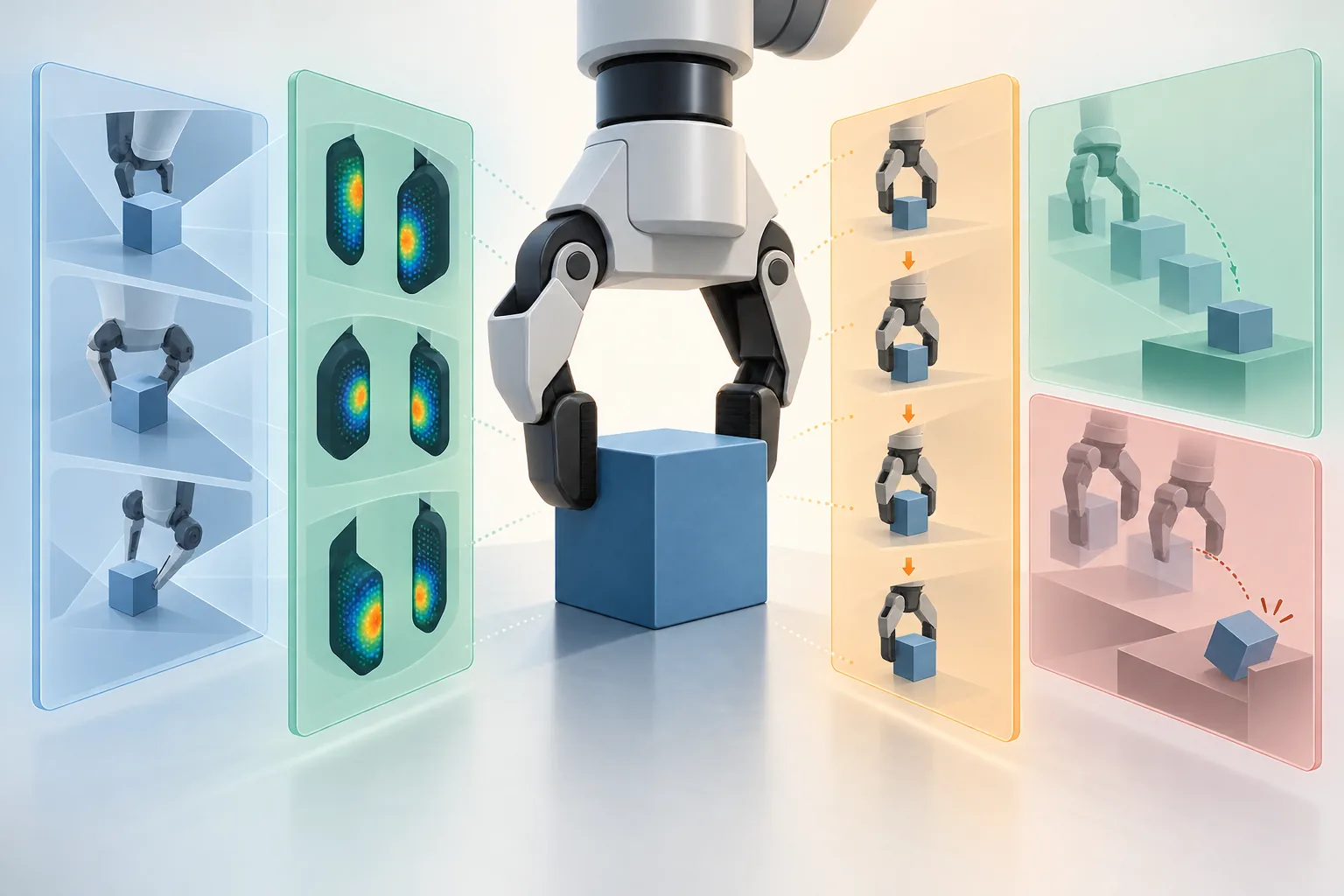
Separating pose-goal attainment from object drops revealed the reported tradeoff: the state-based LEAP-hand policy reached 95.2% of goals, while a residual safety filter cut drops by 75% and retained 91.5% goal attainment.

Written
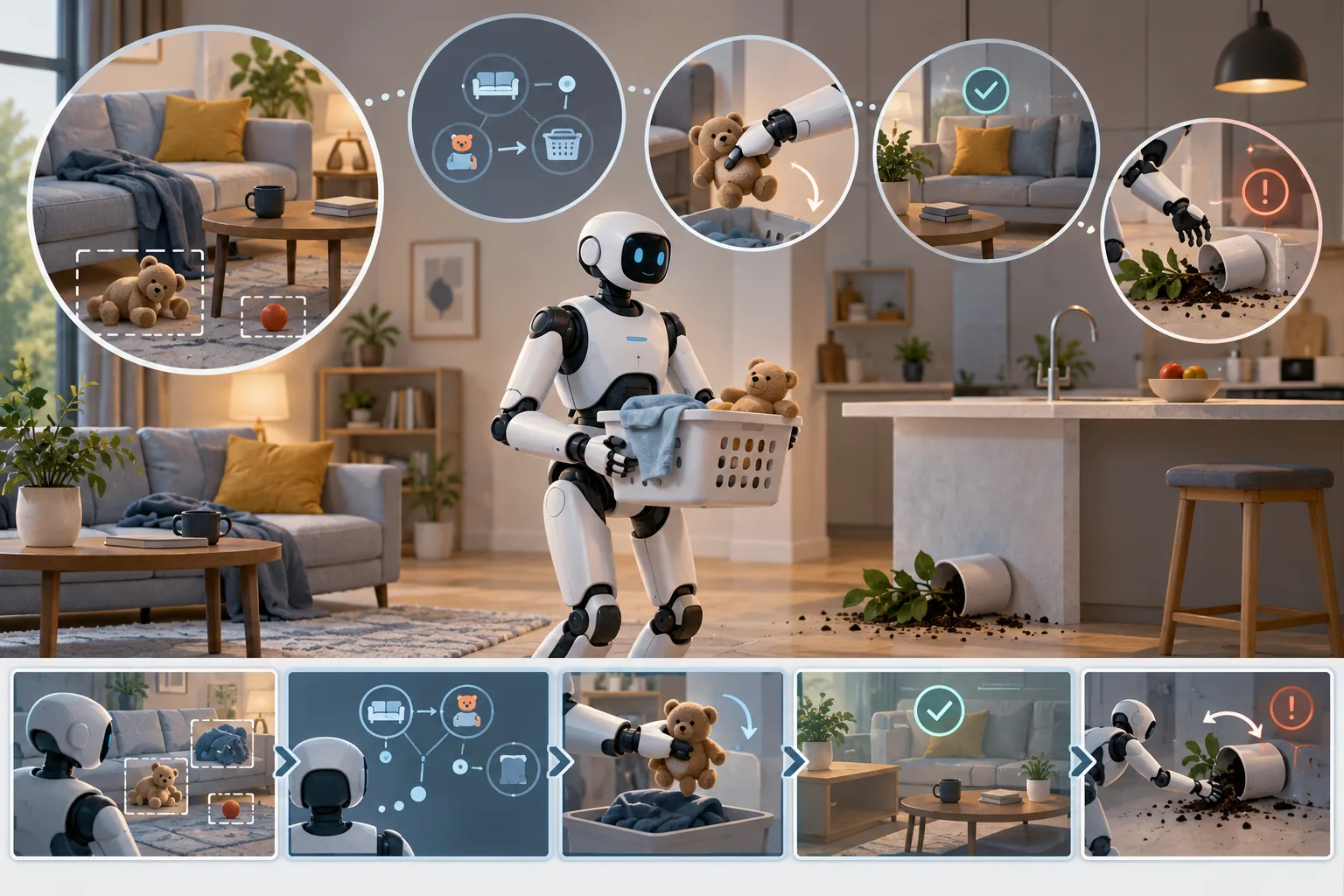
Conceptual illustration of a household robot progressing through discovery, reasoning, manipulation, verification and recovery stages in a simulated home.

Data and benchmarks

RobotAgentBench Tests the Autonomy Loop Around Manipulation

RobotAgentBench evaluates open-world household agents at two levels: five task-level dimensions and scenario-level integration around high-level user needs. Its real-to-simulation test set covers 50 layouts, multiple task horizons and four open-ended scenarios.

Written

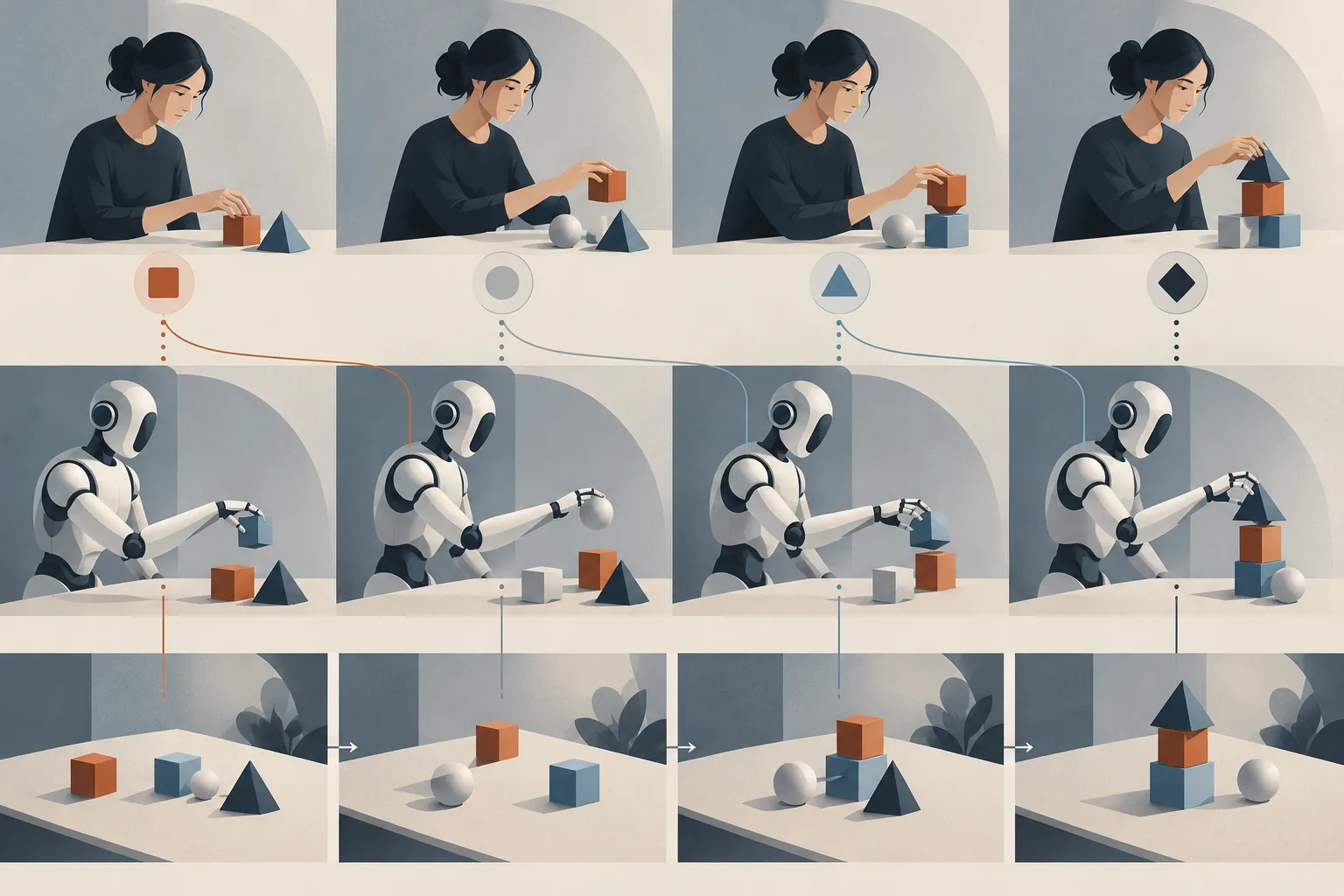
Human and robot motion sequences connected through predicted changes in a shared environment

Embodied AI models

How ThinkWorld Converts Unlabeled Video Into Action Feedback

ThinkWorld initializes discrete Chain-of-Dynamics motion tokens from action-labeled demonstrations. It then predicts the future induced by each chain and reinforces chains whose predictions better match observed video outcomes, allowing unlabeled human and robot videos to supervise a shared action-reasoning space.

Written

What changed

Latest research

Browse all articles
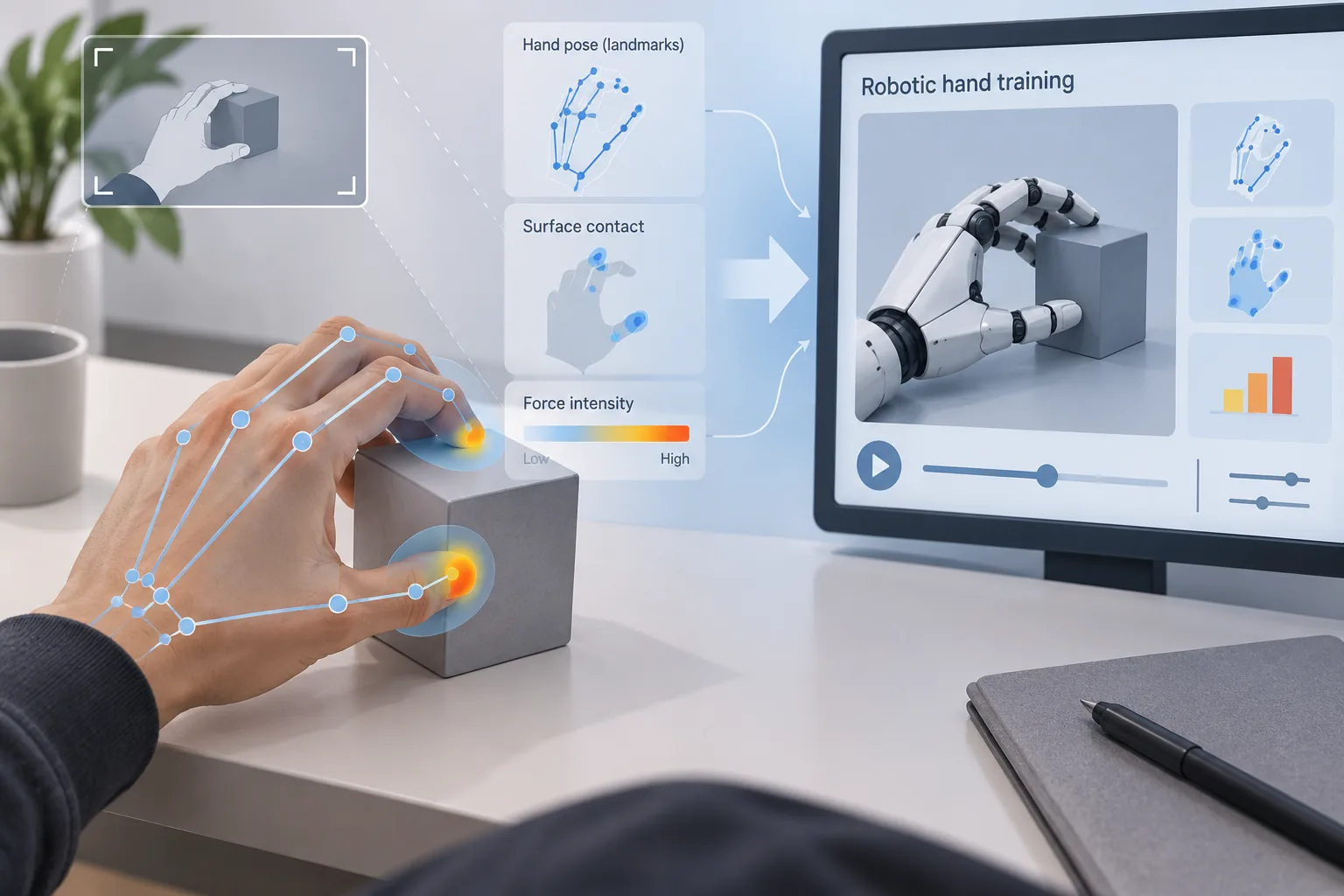
Conceptual illustration of a recorded human hand interaction being converted into hand-pose, contact and force maps for robot learning.

Research updates

RLHND Extracts Hand Motion and Touch Estimates From a Single Video View

RLHND converts a pretrained Cosmos 3 video diffusion backbone into a deterministic clip-level feature extractor for monocular egocentric recordings. Separate streams estimate anatomically plausible hand pose and dense surface contact and force; the authors also claim leading benchmark performance and robot-learning utility, but the available abstract contains no numerical or task-level evidence.

On this site by

The foundations

Understand learning

Browse all articles
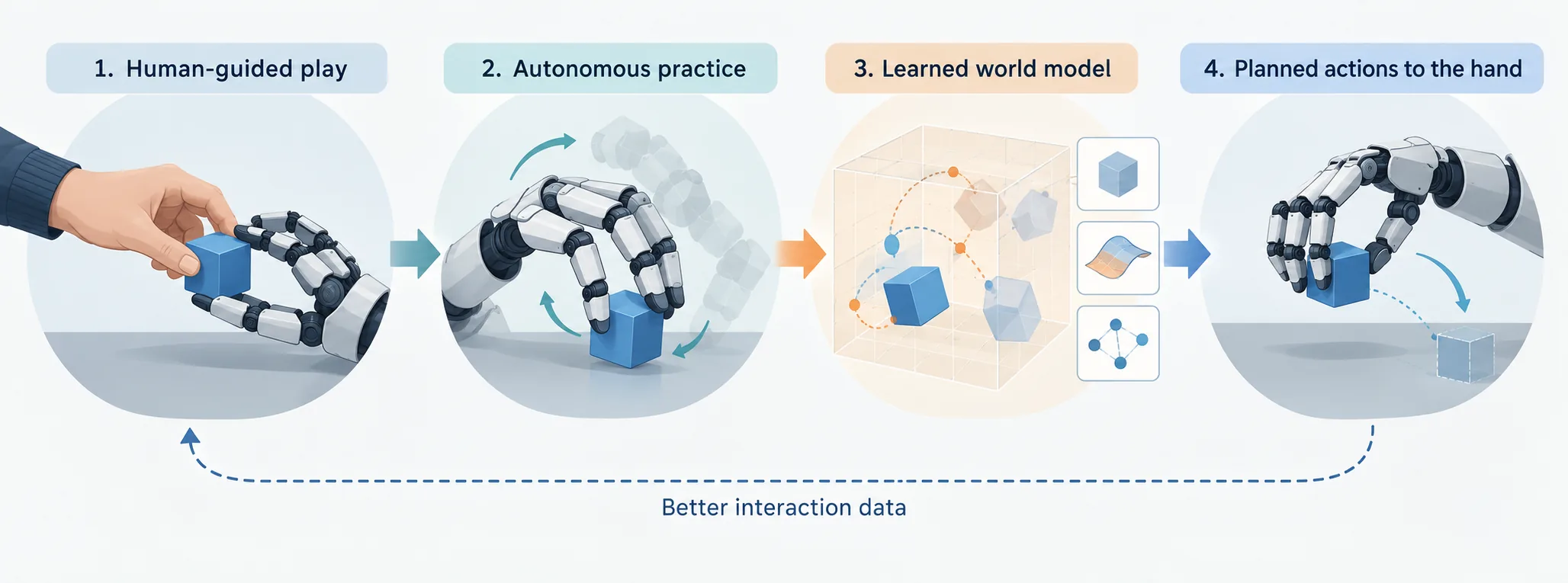
Illustration of a multifingered robot hand learning object manipulation through human-guided play, autonomous practice and world-model planning.

Learning methods

From Guided Play to Autonomous Dexterous Practice

DSP behavior-clones a robot play policy from minutes of human-guided activity, deploys it to collect hours of interaction data, and trains a world model for planning and self-play policy distillation. Its authors report physical-robot results on pushing and in-hand reorientation, including a 69.6% success-rate advantage over hindsight behavior cloning and comparable success to reinforcement learning with 490 times less interaction data.

Published

Conceptual illustration of a robot using a bounded memory bank and a residual memory stream while completing a long sequence of manipulation steps.

Learning methods

A Robot Memory That Saves What the Present Cannot Explain

TTT-RM trains an online fast-weight state on the part of task history that cannot be reconstructed from a robot’s current observation and bounded memory bank. Its authors report simulation gains and a three-minute, eight-stage physical stowing demonstration, but the evidence provided is limited to their preprint abstract.

On this site by

A robot trajectory drifting away from demonstrated examples after a small early error

Learning methods

How Small Errors Derail Robot Imitation Learning

Errors made by an imitation policy can accumulate until the robot drifts beyond the distribution covered by its training demonstrations, a covariate-shift failure mode linked to poor generalization. One real-robot chopstick study addresses single-step errors with added support at critical grasping stages and error accumulation with synthetic corrective labels, while a later preprint evaluates a policy-calibrated noise method in simulated environments.

On this site by

Beyond the lab

From lab to robot

Browse all articles
Illustration of a robot arm alternating between broad rapid movements and precise movements near an object.

Embodied AI models

PaceVLA Varies Action Timing to Preserve Precision

PaceVLA uses mode-specific decoders, a quantizability signal and a context-conditioned router to choose between coarse and fine temporal action modes. Its authors report better execution efficiency without reduced task success in simulation and six physical-robot tasks, but the admitted evidence contains no detailed metrics or independent confirmation.

Published

Conceptual illustration of a robot planner updating task context from observations and execution feedback during a multistep manipulation task.

Embodied AI models

Inside SERA’s Self-Evolving Harness for History-Dependent Robot Tasks

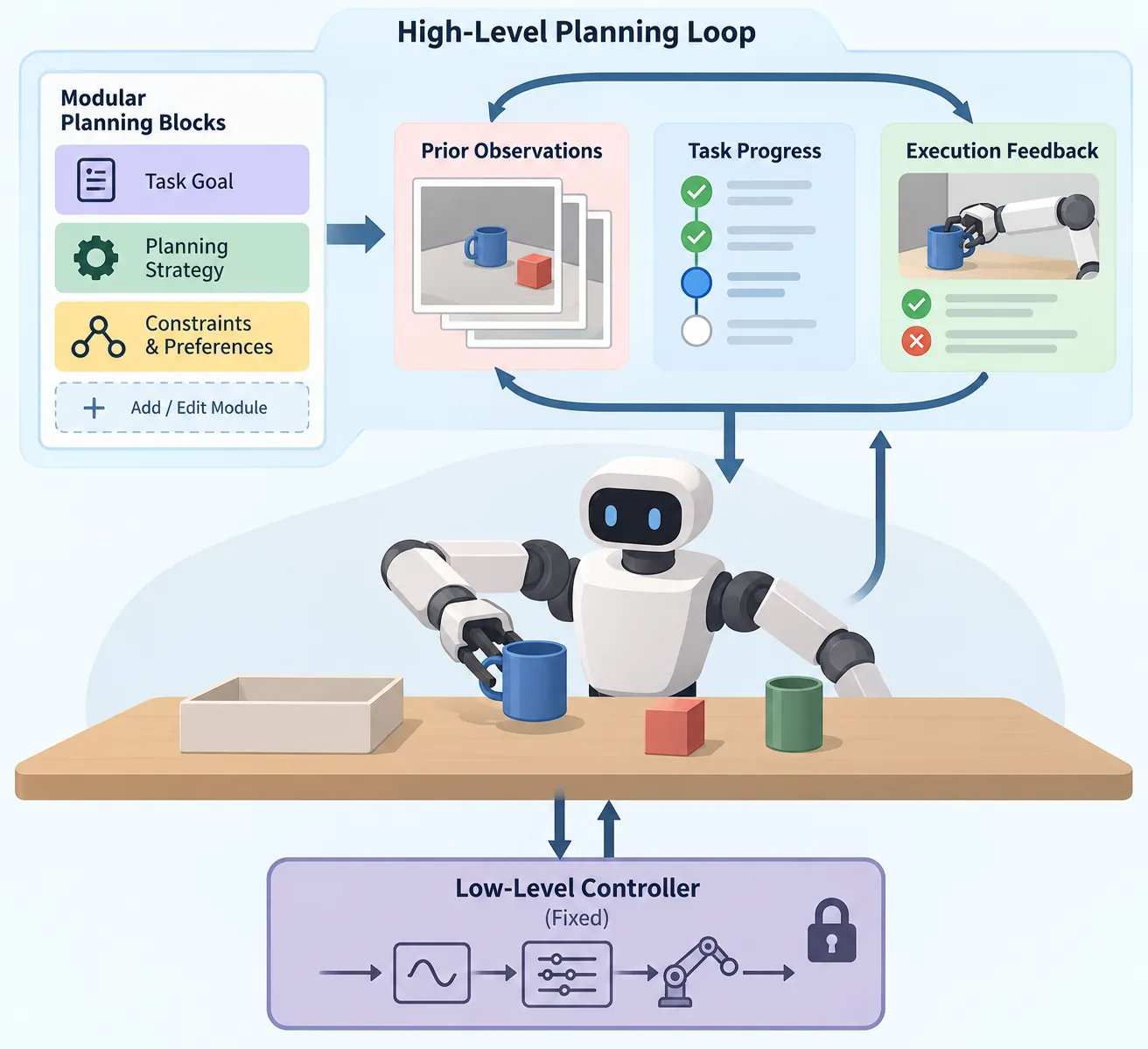
SERA maintains task context with observations and execution feedback while a fixed VLA model handles low-level control. Environment rollouts evaluate changes to its high-level planning harness, and the selected configuration is frozen before held-out testing.

Published

Conceptual robot manipulation scene connected to aligned visual, tactile and task-state predictions

Simulation to reality

What PhysCanvas Tests Reveal About World-Model Policy Evaluation

PhysCanvas unifies multi-view RGB, tactile images, marker displacement, task state and actions in a shared vision space. Its frozen reward models supervise scene preservation, visual-tactile compatibility and agreement with real task outcomes. Across four real-world manipulation tasks, the authors report increased mean task-wise correlation between world-model and real-world success rates and a higher mean real-world success rate after reward-guided policy post-training.

Published

Proof and limits

Evidence and reliability

Browse all articles
Two identical robot workspaces diverging because of different earlier events

Data and benchmarks

When Similar Robot Scenes Should Produce Different Actions

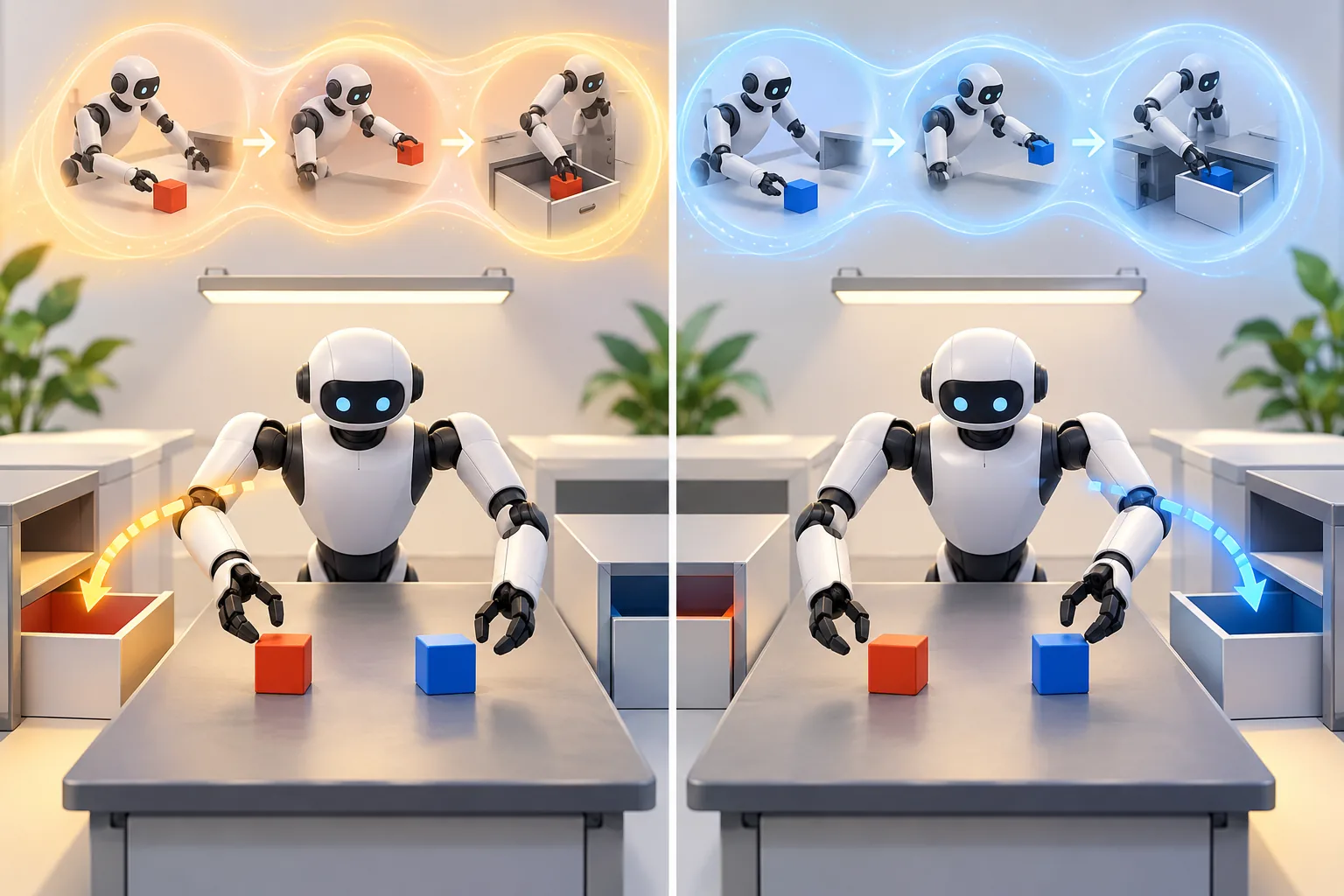
Counterfactual pairs compare similar present observations whose different histories require different actions, providing a targeted behavioral test of whether a robot policy responds to relevant past events.

Published

Robotic hands facing varied objects and manipulation challenges in a modular test environment

Data and benchmarks

How a Benchmark Can Reveal Dexterous Transfer Beyond Training Examples

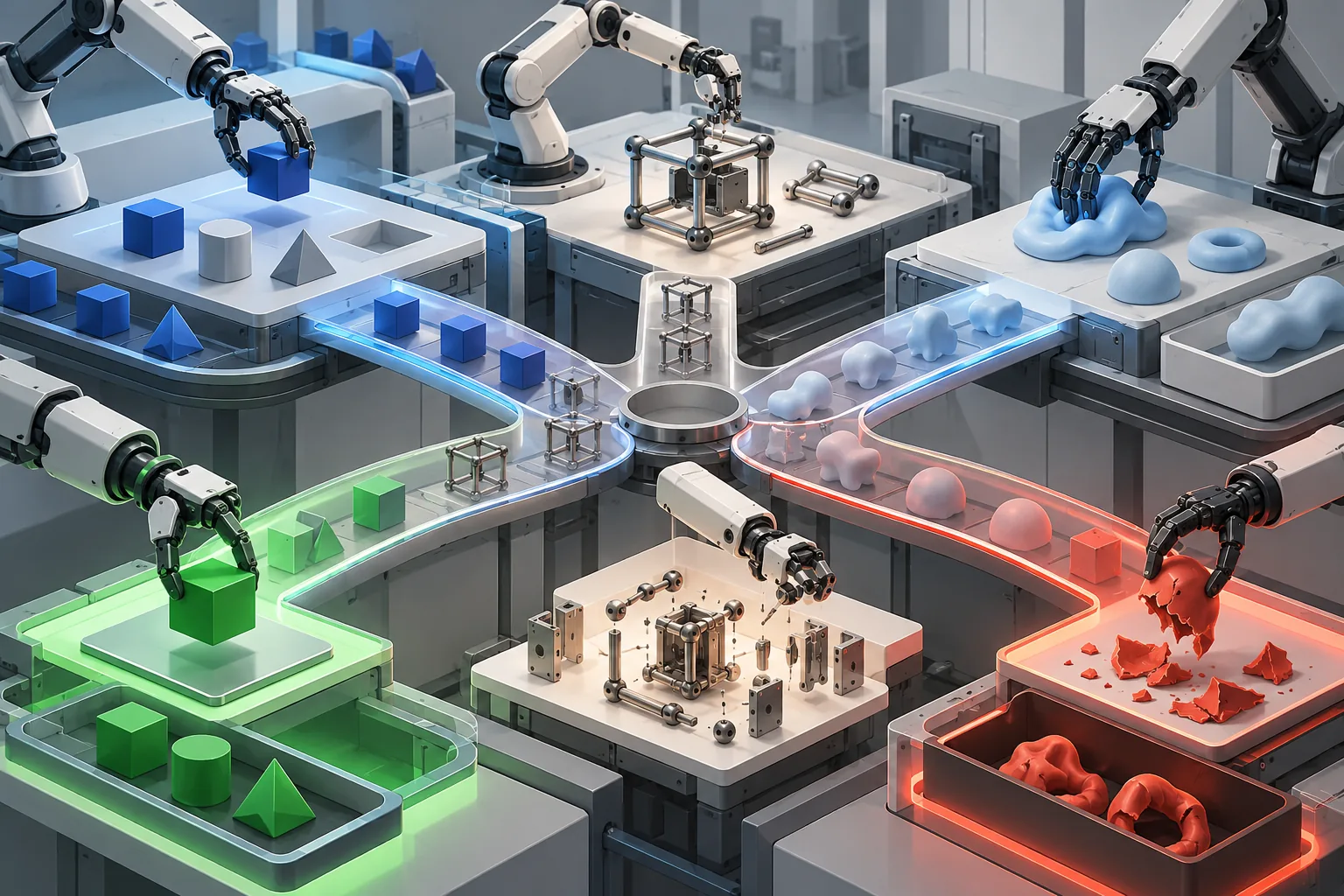
A useful dexterous-manipulation benchmark separates demonstration-supported execution from held-out transfer, varies embodiments and task demands, diagnoses distinct execution failures, and keeps simulation scores separate from qualitative real-robot evidence.

Published

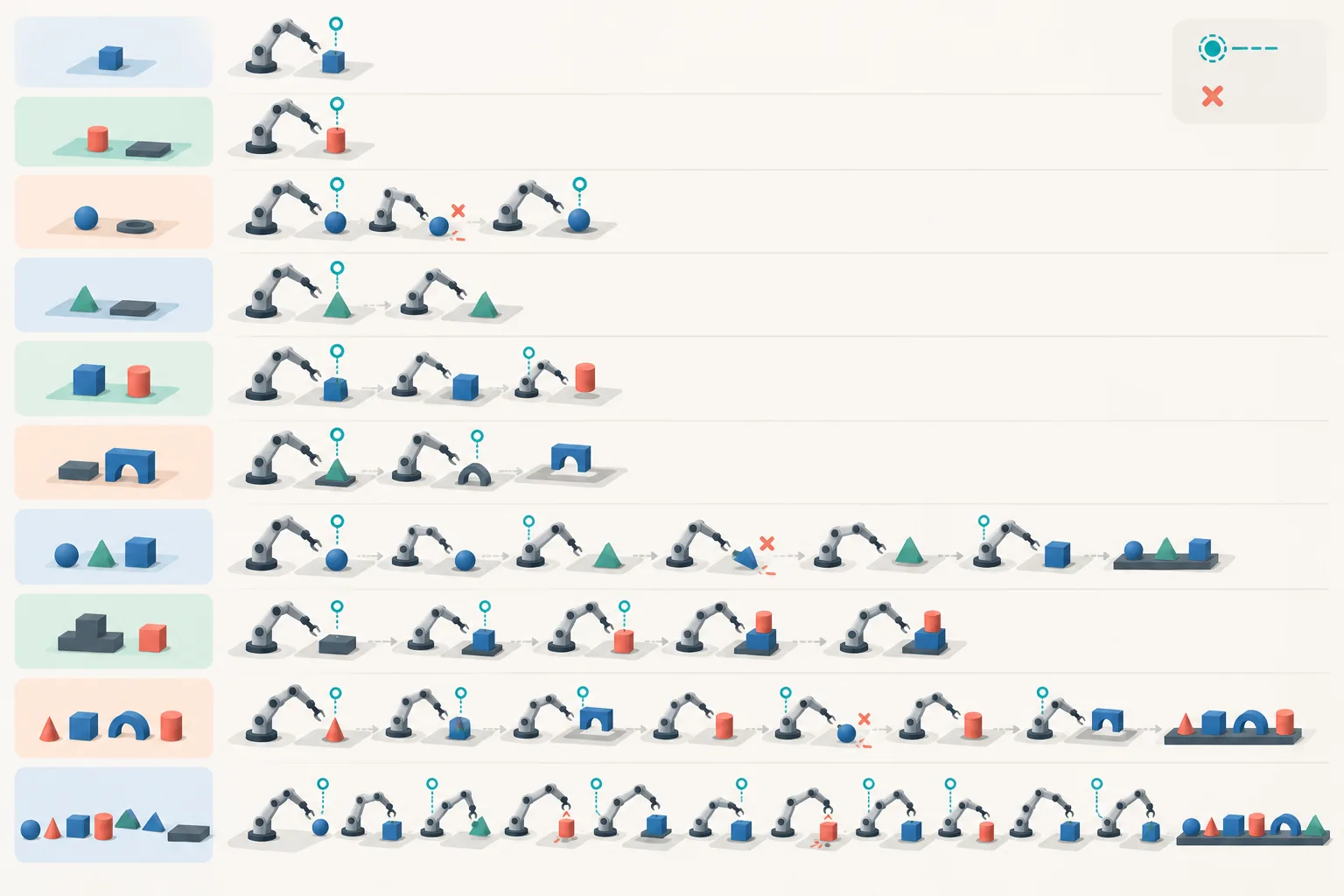
A generic robot manipulation benchmark arranged as a sequence of increasingly long chains of subgoals.

Data and benchmarks

LADDER Probes Where Long Robot Tasks Break Down

LADDER holds the environment constant while scaling manipulation tasks from one to ten subgoals. Its authors report that direct low-level policies collapse on longer tasks, orchestration improves results, and remaining errors reveal limits in physical execution, though the evidence is confined to their preprint abstract.

Published

Topics