The library
Articles
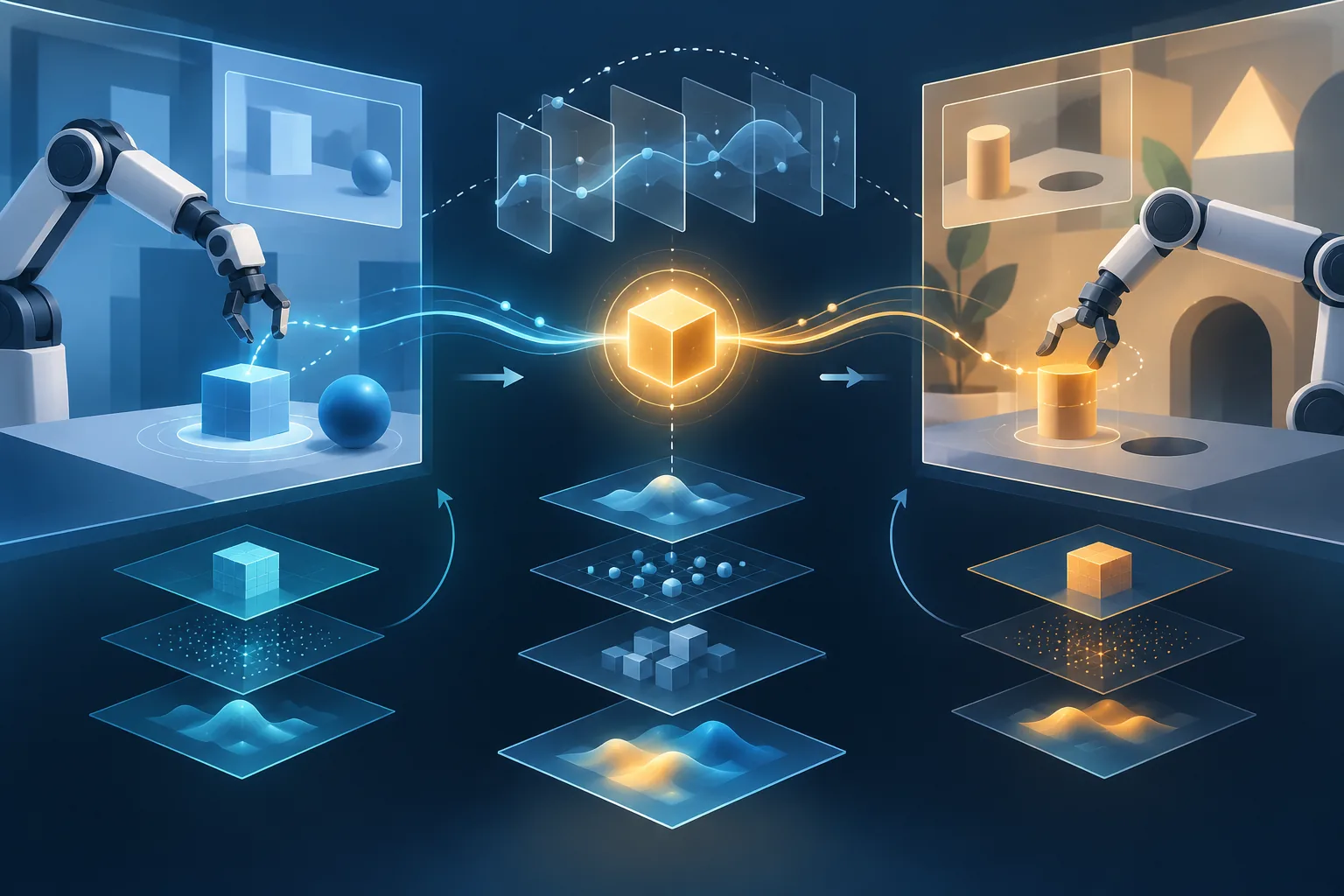
TERRA Uses Compact Temporal Effects and EAT to Preserve Latent-Action Meaning
TERRA learns latent actions from compact representations of temporal visual change. Its EAT mechanism aligns the effects produced by the same code across different initial states, while the reported evaluations remain claims from the preprint’s authors.
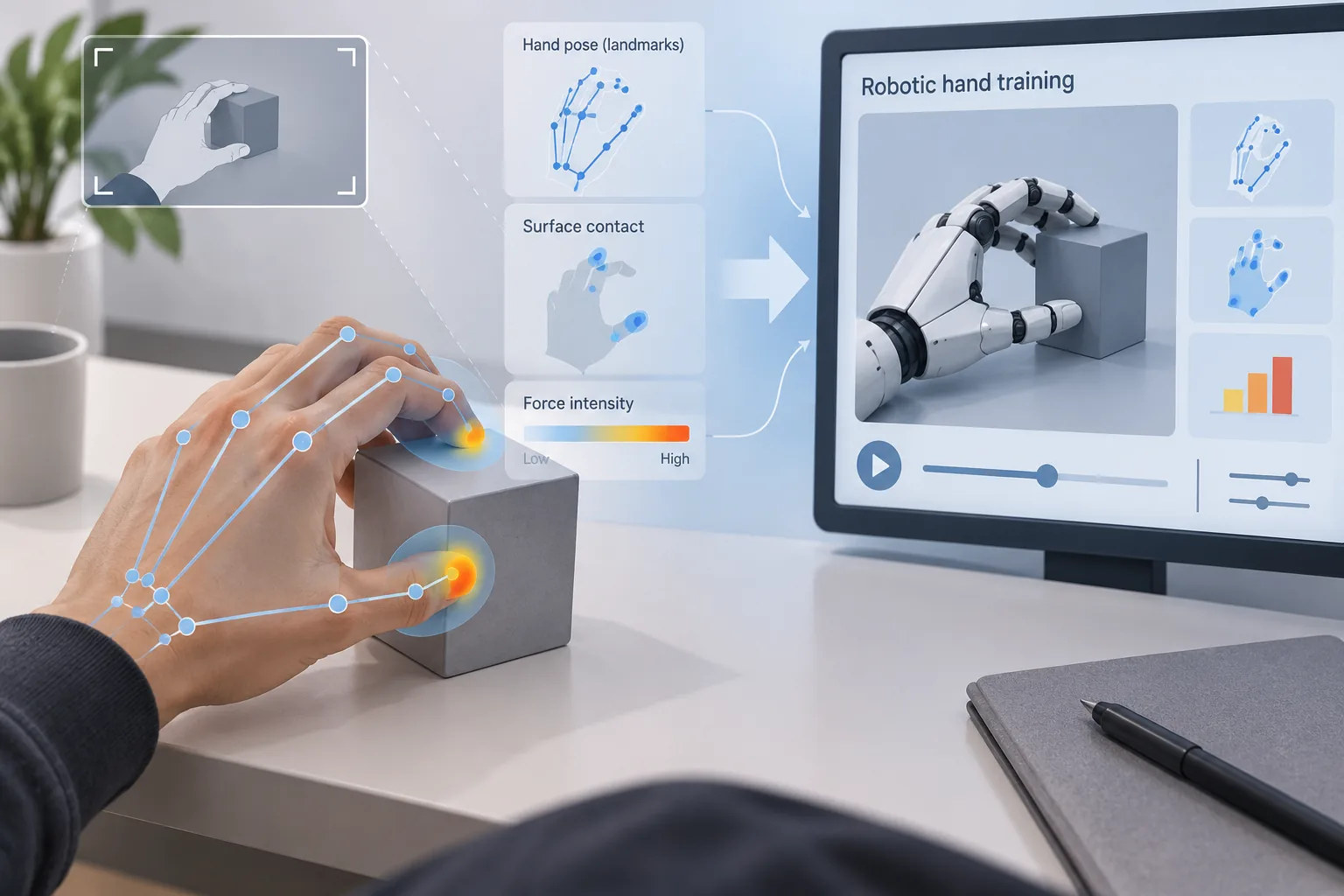
RLHND Extracts Hand Motion and Touch Estimates From a Single Video View
RLHND converts a pretrained Cosmos 3 video diffusion backbone into a deterministic clip-level feature extractor for monocular egocentric recordings. Separate streams estimate anatomically plausible hand pose and dense surface contact and force; the authors also claim leading benchmark performance and robot-learning utility, but the available abstract contains no numerical or task-level evidence.
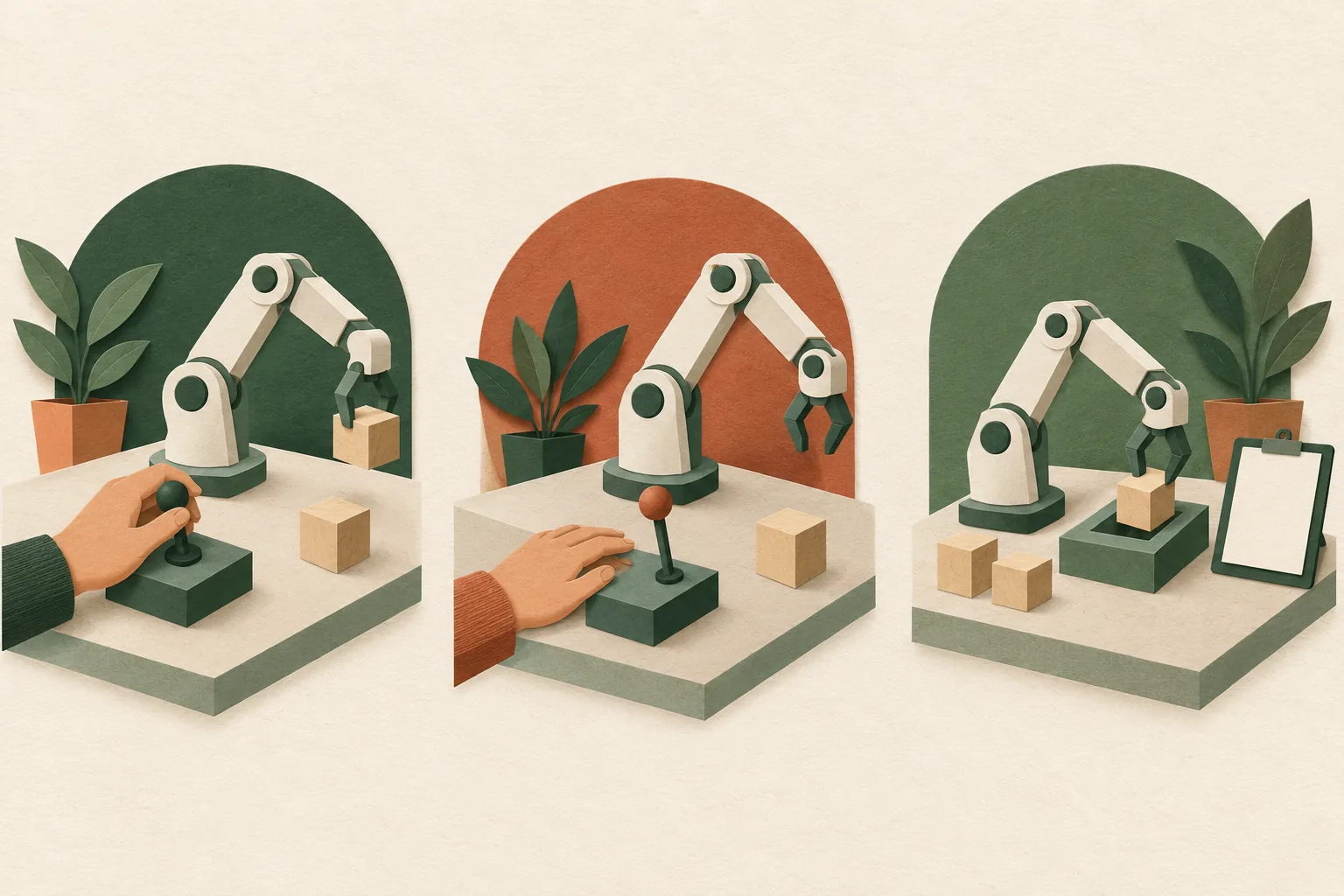
When does human help teach a robot, and when is it part of a test?
A reading guide to human input during data collection, online training and evaluation, illustrated with LeRobot and Bee.
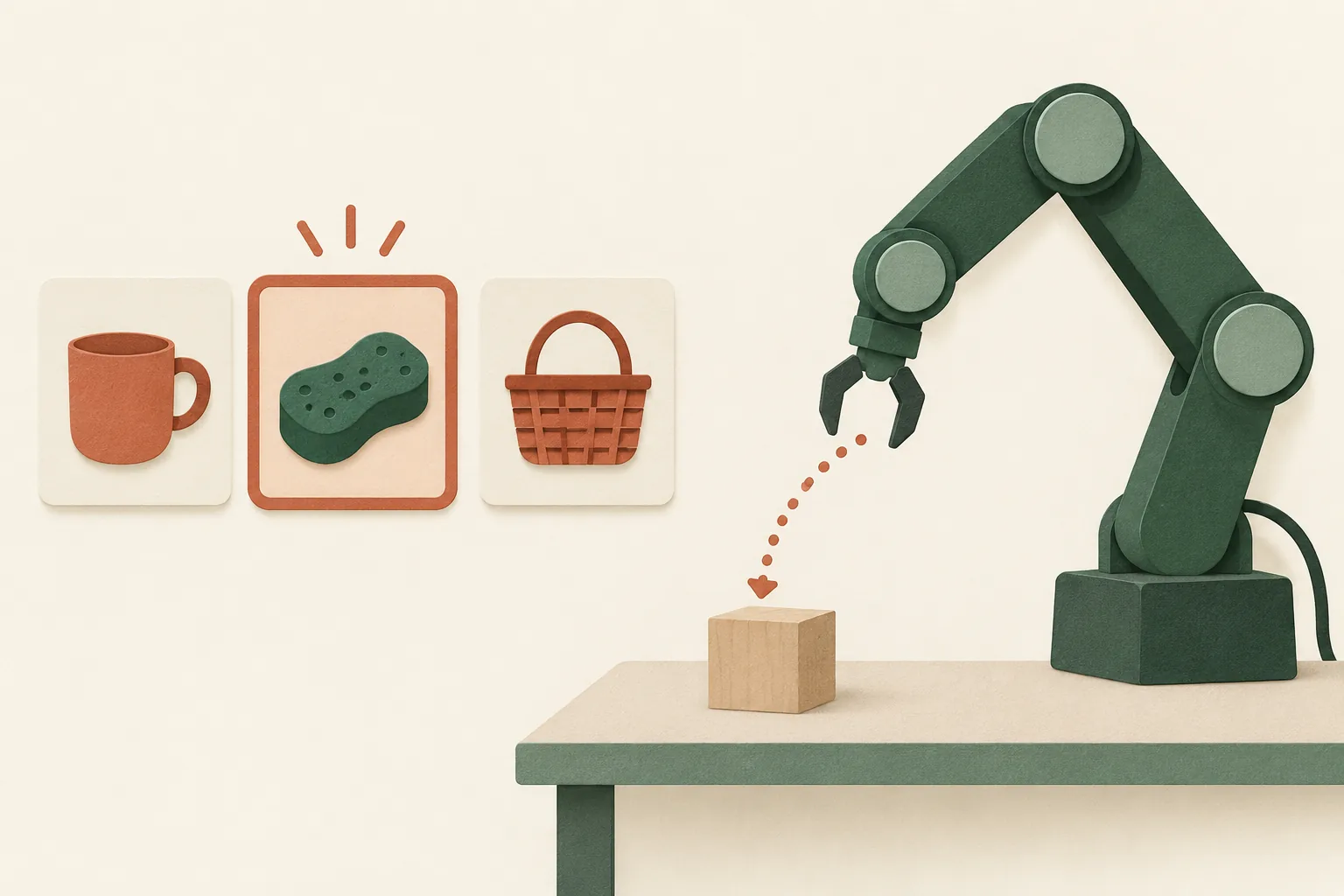
Robot planners and action policies: what does each output?
Compare a skill selector with an action predictor, using the interfaces described by the SayCan and OpenVLA authors.
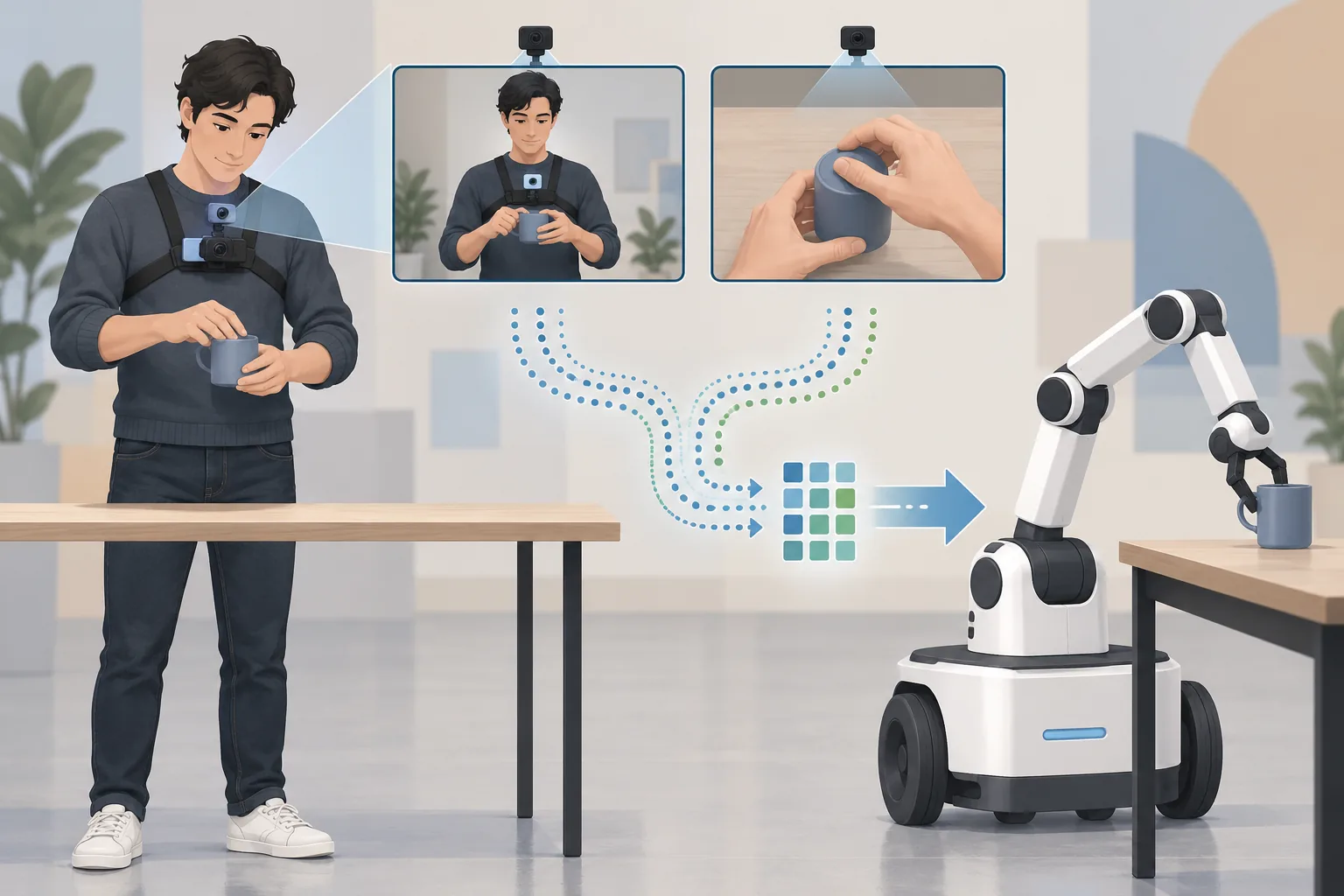
How VOMMI Turns Portable RGB Recordings Into Robot Training Signals
VOMMI reconstructs motion from synchronized body and hand RGB views, then uses local-motion tokens to condition vision-language-action post-training. The authors report improvements in trajectory reconstruction, base-velocity error, and mean success across three real-robot tasks.
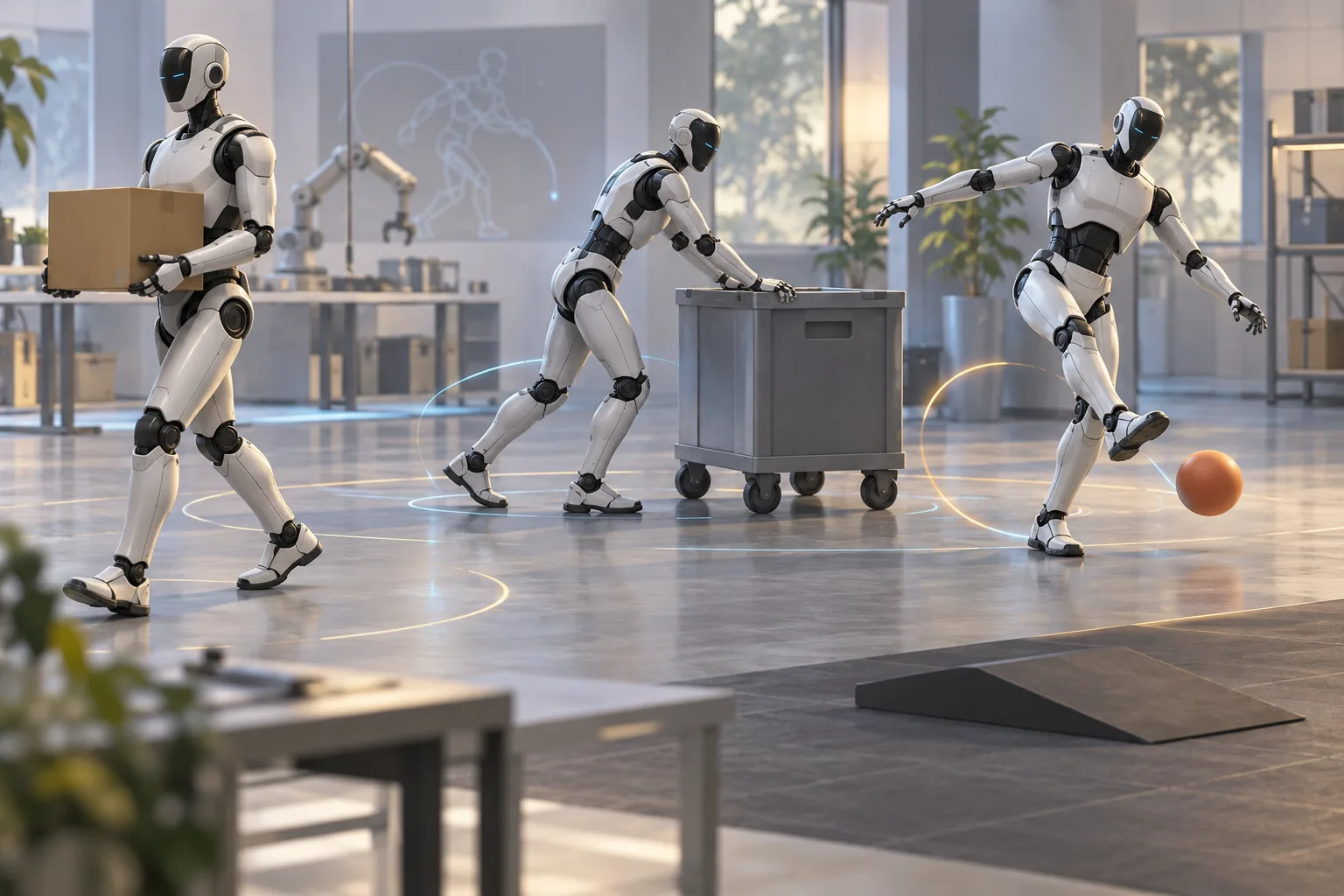
How One Humanoid Policy Learns to Handle Different Objects
The I-BFM authors describe a policy that learns shared humanoid, object and contact dynamics, uses interaction and goal targets across different time scales, and follows latent commands associated with downstream rewards. They report 94.3% nominal success on Carry and 89.3% after robot falls, alongside experiments on a Unitree G1.