The library
Articles
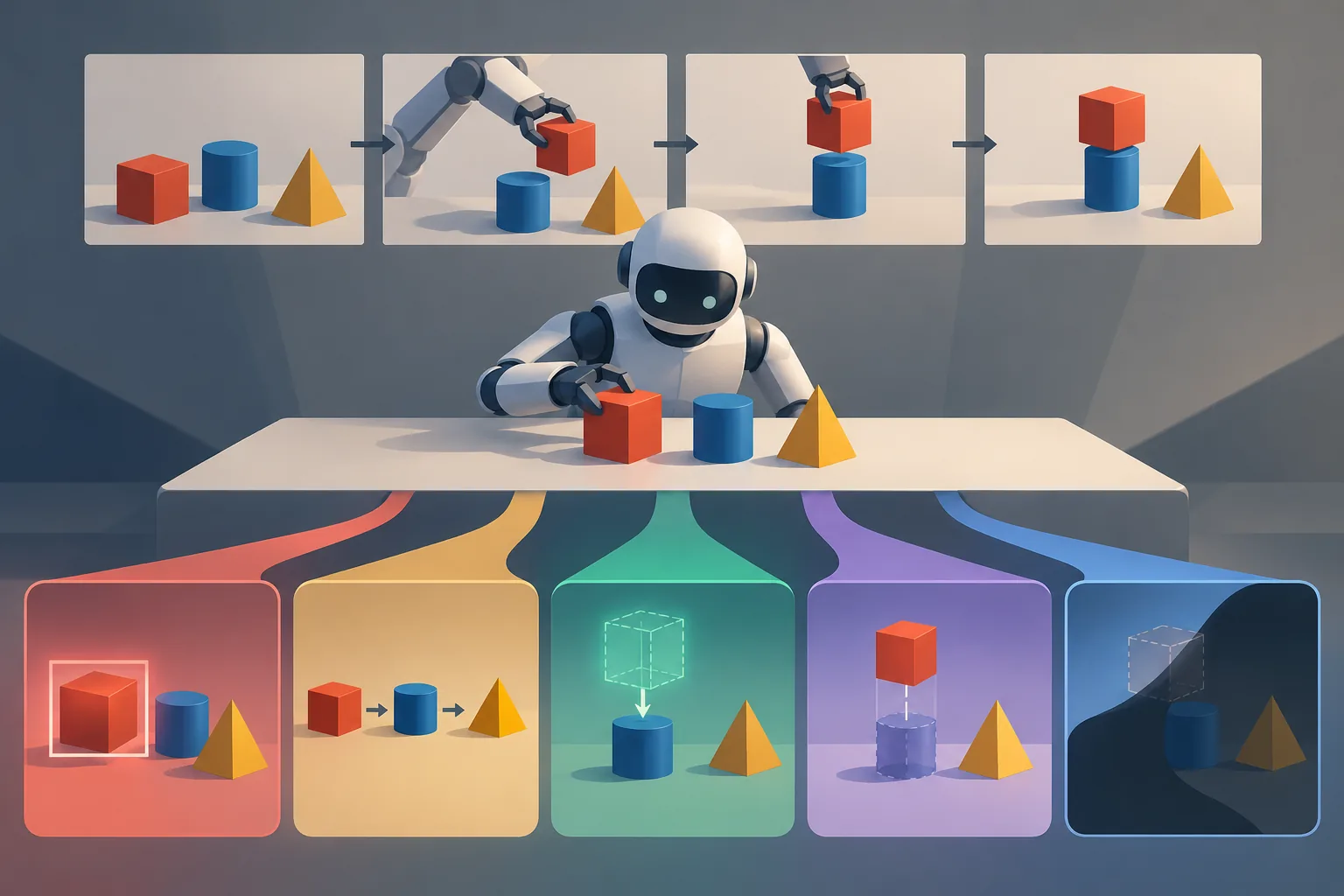
How Visual Ablations Expose Task Priors in Robot Evaluation
A benchmark can distinguish temporal task understanding from prior-driven guessing by scoring recognition, matching, ordering, prediction, correspondence, and localization separately, then repeating matched questions without visual observations. The reported matching and ordering scores diverge sharply, and next-action prediction changed far less than current-action recognition when observations were removed.
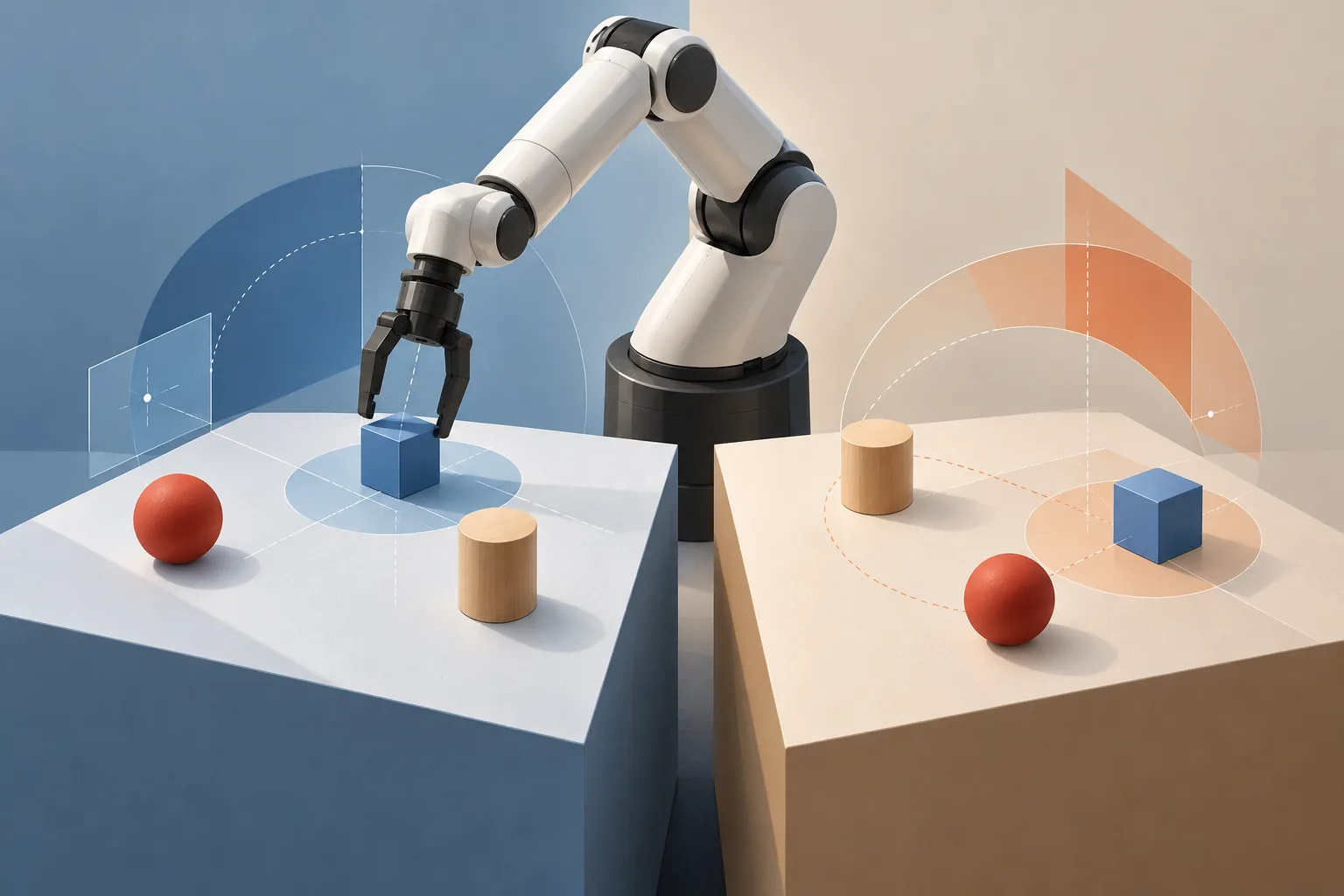
A Controlled Test for Spatial Grounding in Real Robots
Spa-Bench compares in-distribution and out-of-distribution spatial configurations while retaining training support for relevant objects, concepts, and actions. The authors use diagnostic conditions to probe physical execution, sensitivity to wording, object-task associations, and recognition that no action is required; matched direct instructions improved success in the reported results.
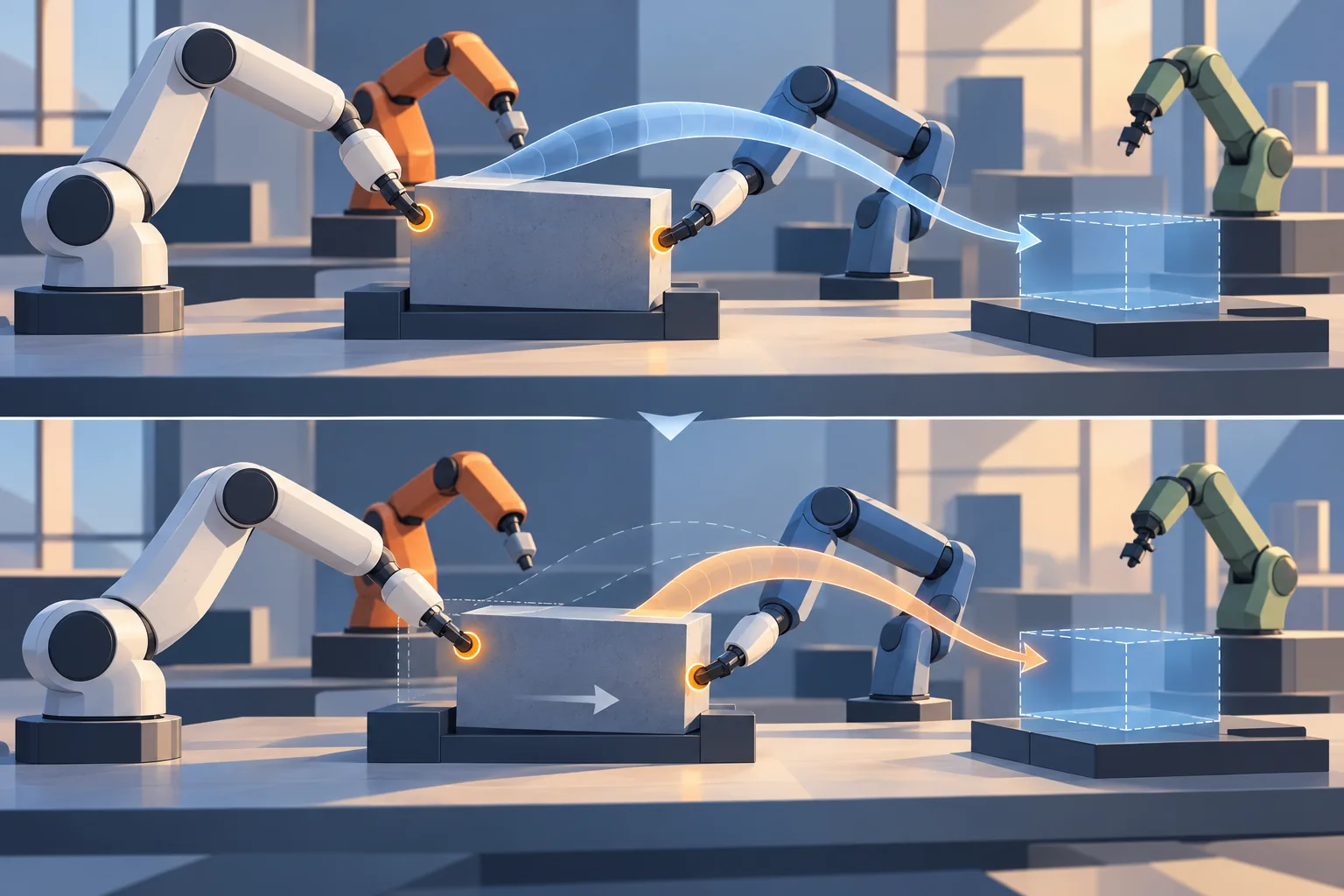
Separating a Robot Task’s Effect From Its Actor
A demonstration is compiled into coordinates describing object motion, contact locations and the desired final scene. It holds that effect program fixed while generating an execution from the live scene, so people can edit the intended outcome and the robot can re-solve the task after changes.
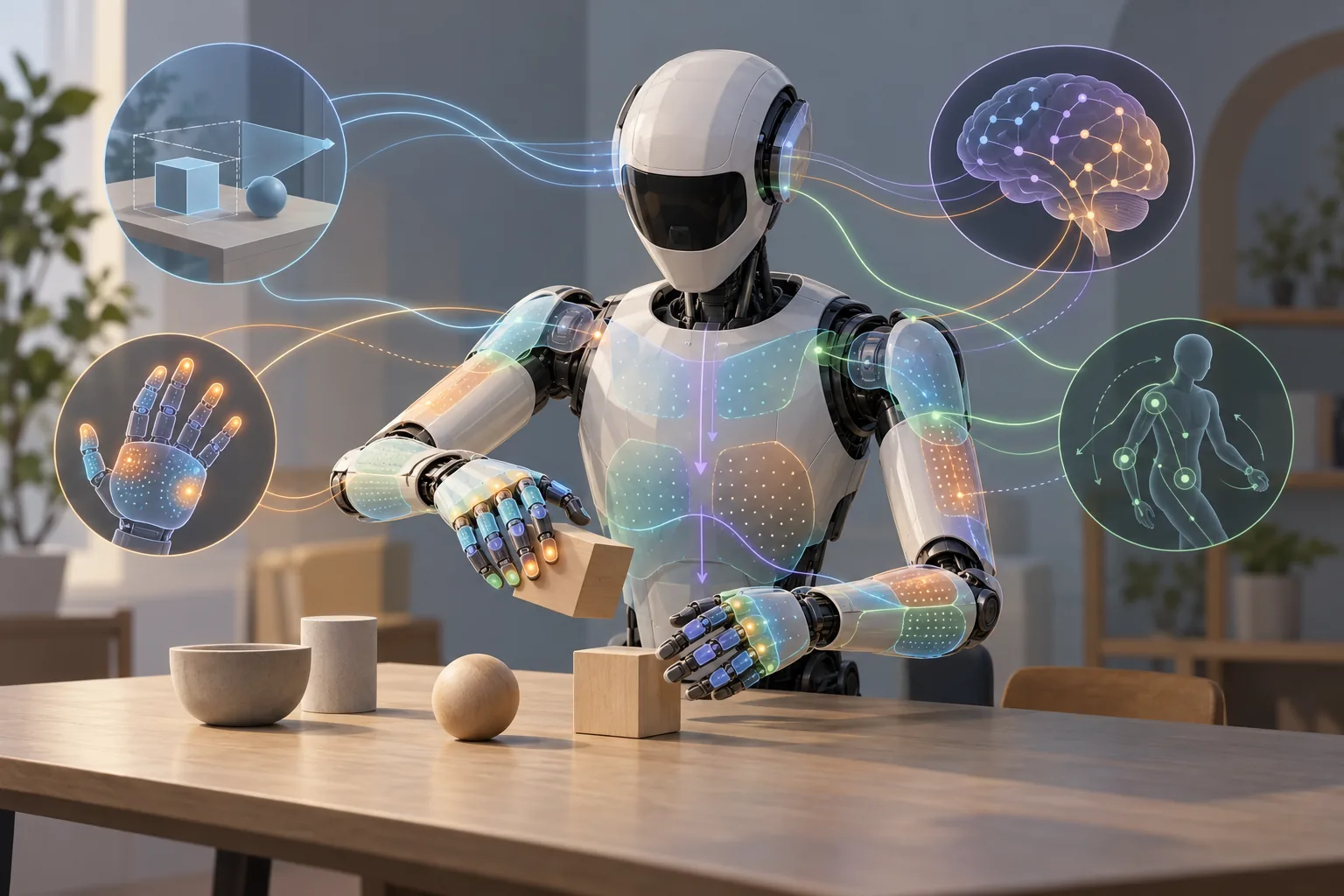
Uni-VLaT Adapts Humanoid VLA Policies With Whole-Body Touch
Uni-VLaT adds a distributed tactile pathway to pretrained VLA policies and trains it to predict future touch, proprioceptive, and visual representations alongside actions. Its authors report a 75% average success rate across five real-robot tasks, while the single-preprint evidence does not provide independent confirmation.
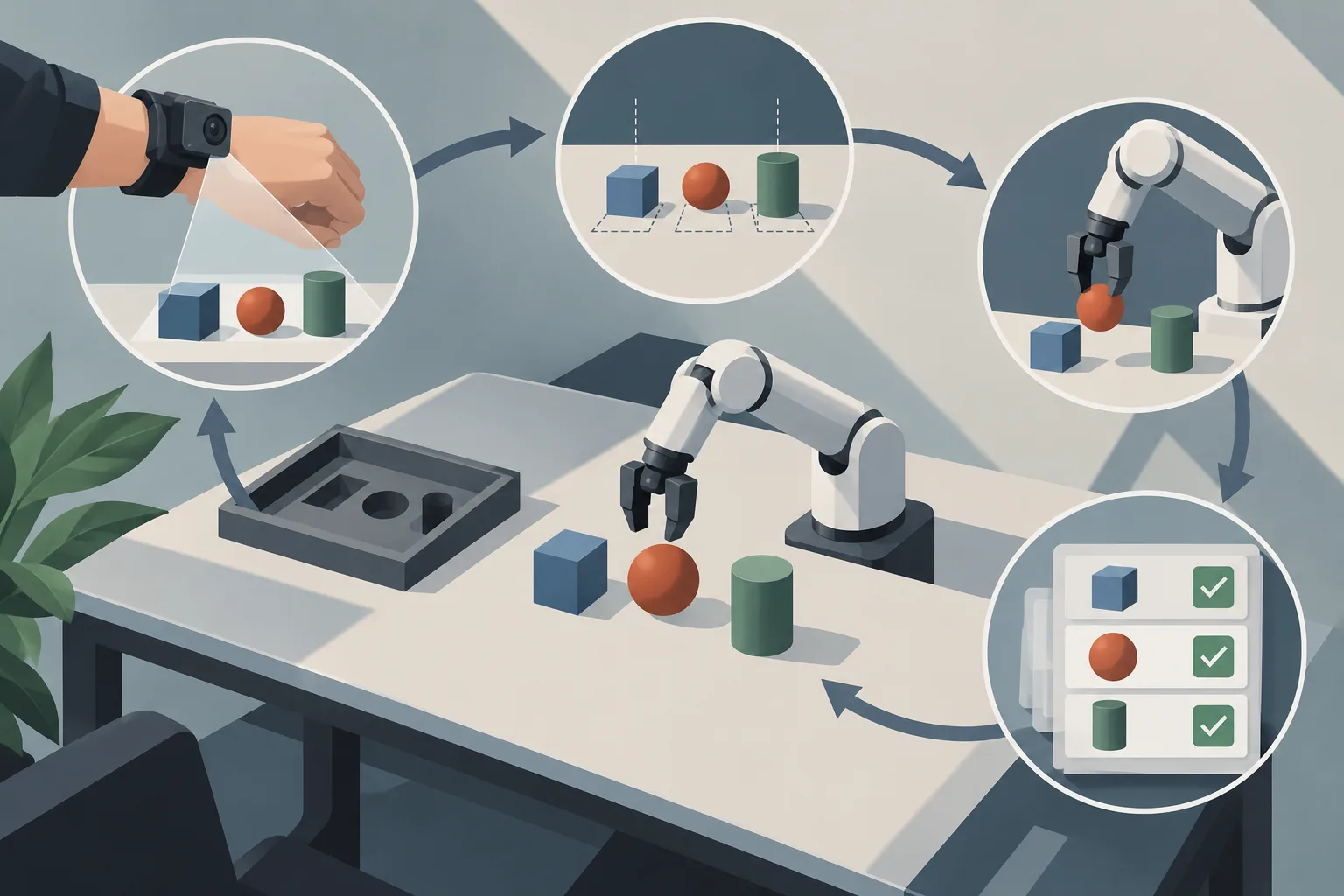
What a Real-Robot Test Must Control from Reset to Result
The admitted excerpts support coordinating data collection, scene reset, policy execution, result logging, and task-factor analysis, while using success classifiers and reset policies as mechanisms for repeatable trials; they do not provide a complete implementation recipe.
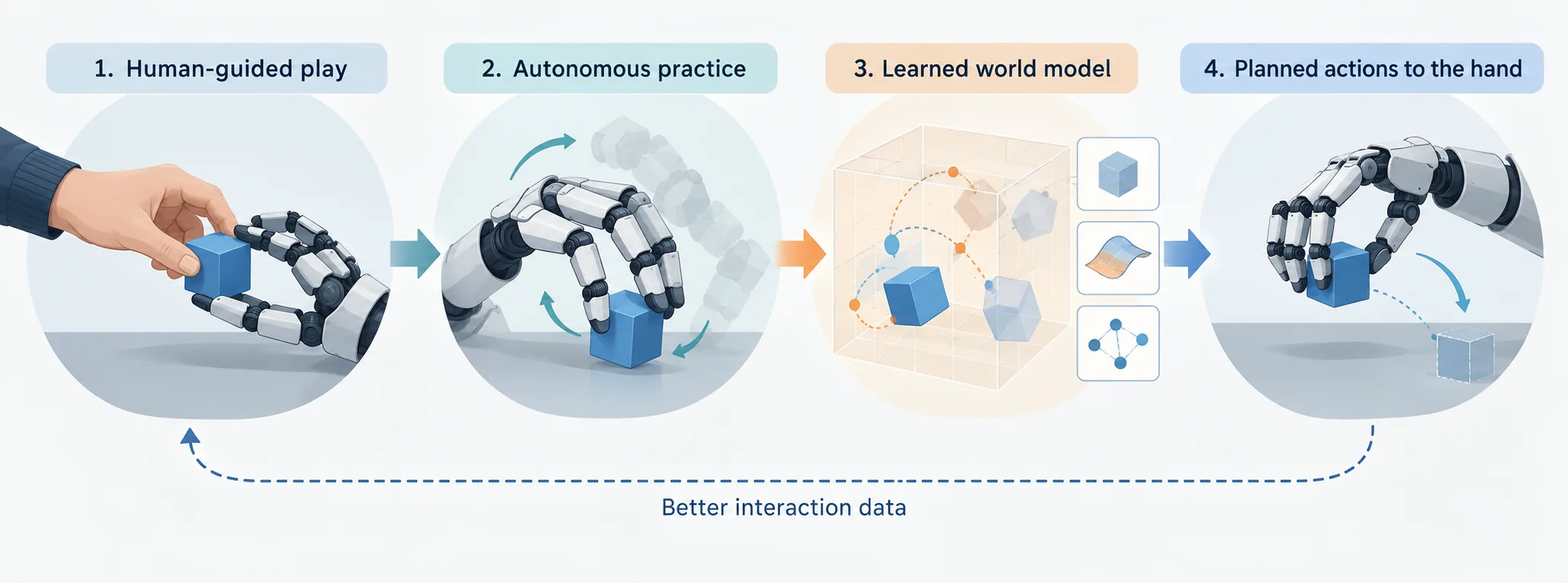
From Guided Play to Autonomous Dexterous Practice
DSP behavior-clones a robot play policy from minutes of human-guided activity, deploys it to collect hours of interaction data, and trains a world model for planning and self-play policy distillation. Its authors report physical-robot results on pushing and in-hand reorientation, including a 69.6% success-rate advantage over hindsight behavior cloning and comparable success to reinforcement learning with 490 times less interaction data.