The library
Articles
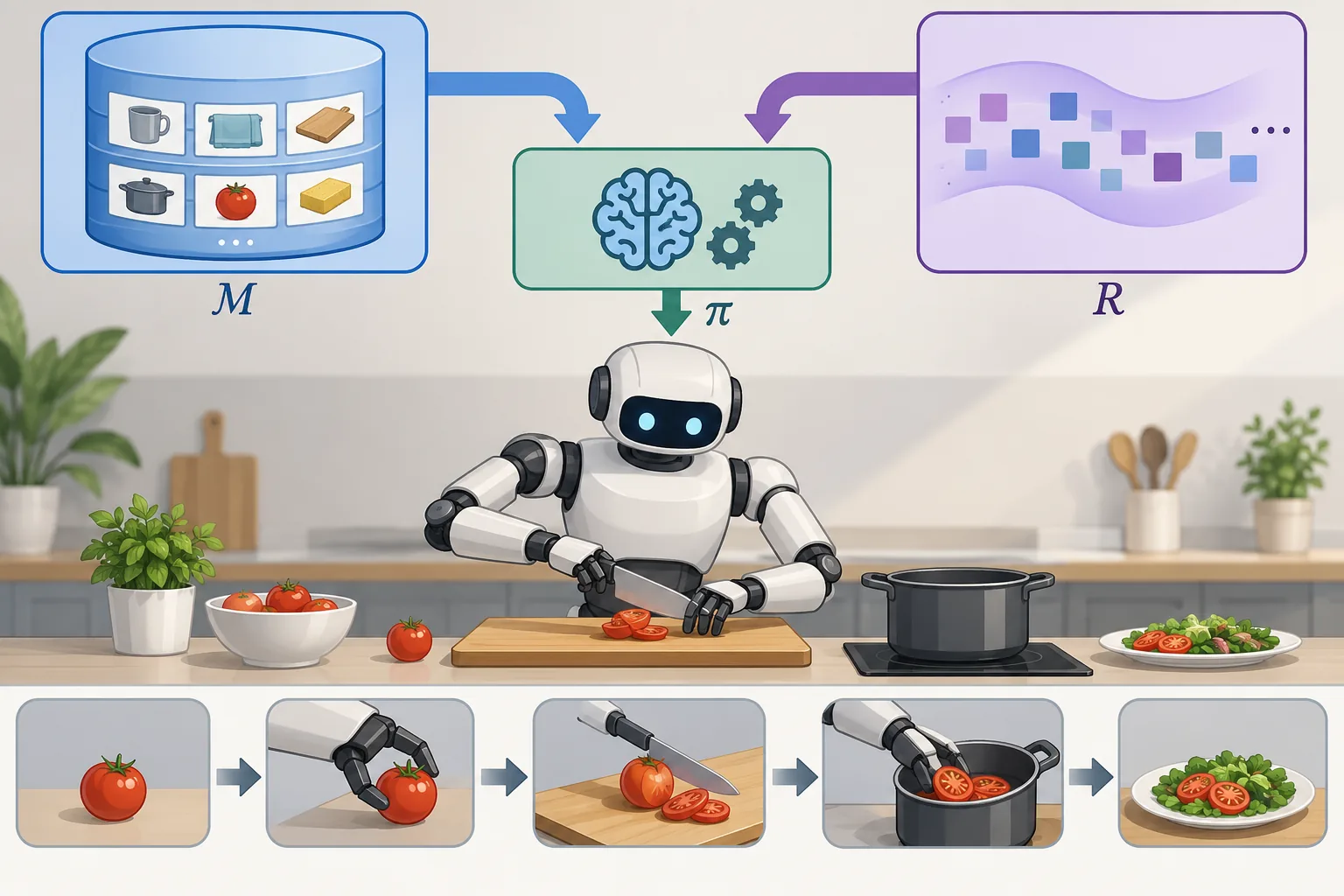
A Robot Memory That Saves What the Present Cannot Explain
TTT-RM trains an online fast-weight state on the part of task history that cannot be reconstructed from a robot’s current observation and bounded memory bank. Its authors report simulation gains and a three-minute, eight-stage physical stowing demonstration, but the evidence provided is limited to their preprint abstract.
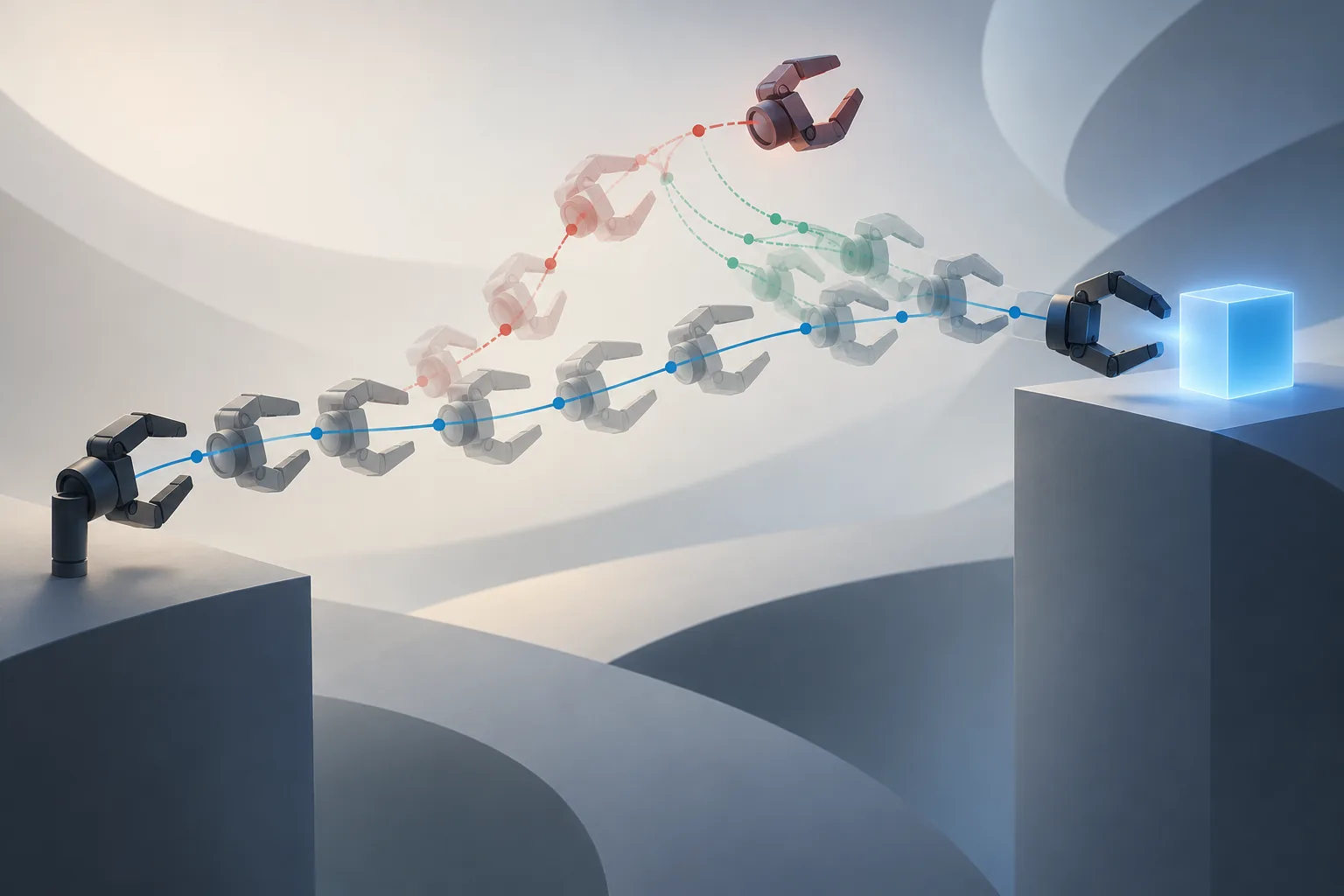
How Small Errors Derail Robot Imitation Learning
Errors made by an imitation policy can accumulate until the robot drifts beyond the distribution covered by its training demonstrations, a covariate-shift failure mode linked to poor generalization. One real-robot chopstick study addresses single-step errors with added support at critical grasping stages and error accumulation with synthetic corrective labels, while a later preprint evaluates a policy-calibrated noise method in simulated environments.
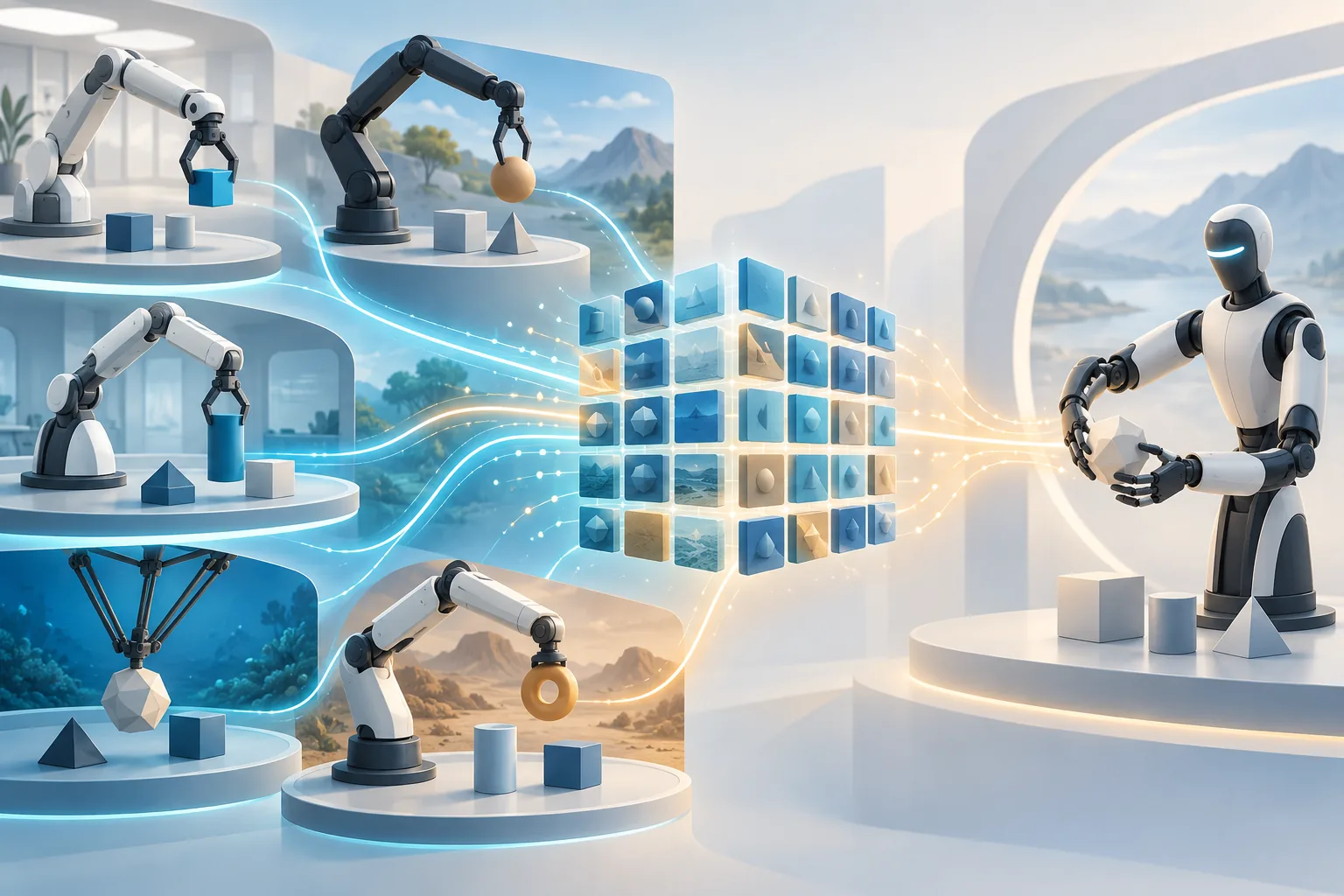
Why Breadth Matters in Robot Training Data
Variation across tasks, environments, arms, and grippers can widen the conditions a robot policy handles, but the available studies do not isolate diversity from dataset scale or establish universal gains.
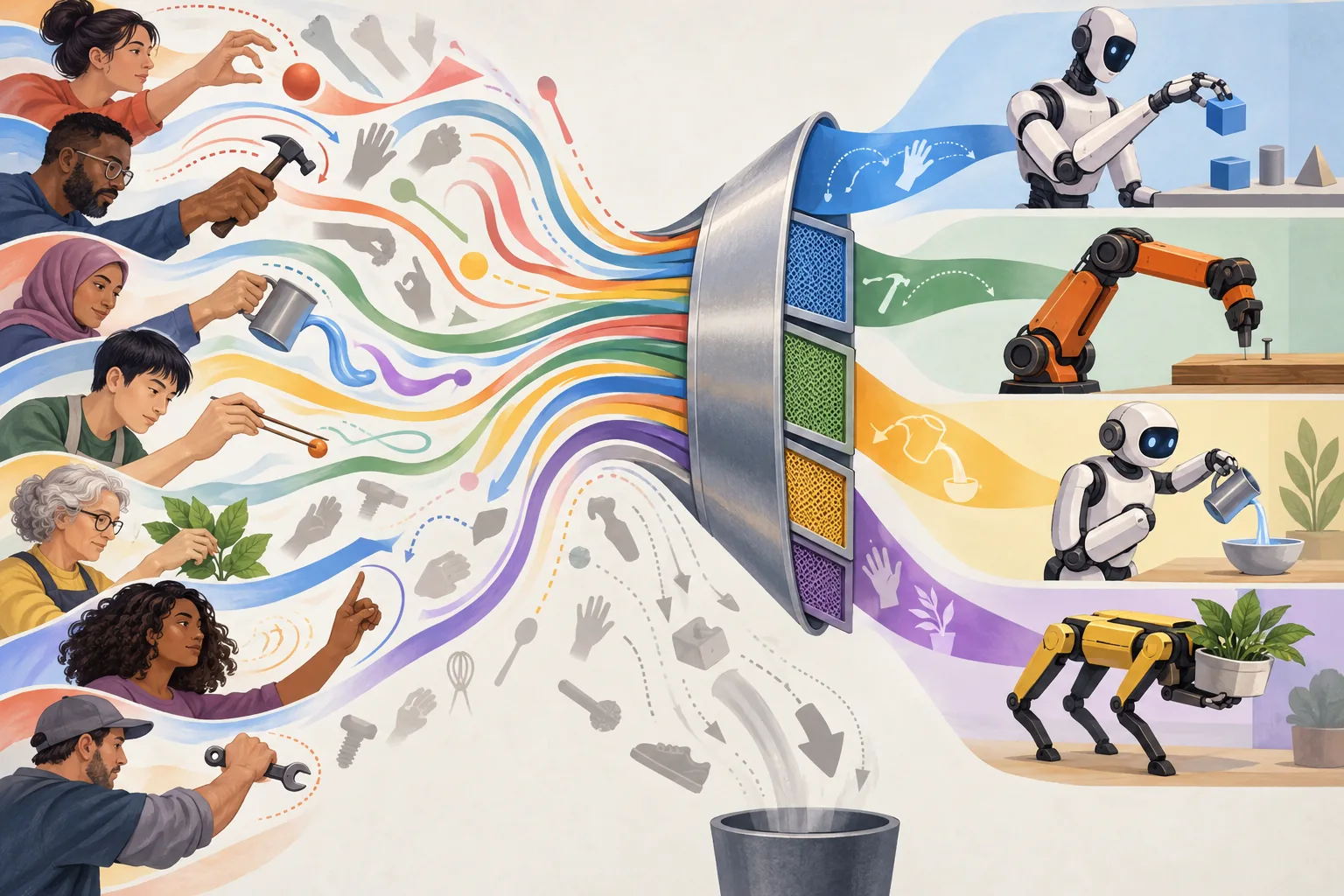
When More Human Demonstrations Generally Improve Robot Policies
The EgoVerse authors report that robot policy performance generally improves with more human demonstrations when the data align with the learning objectives, although the available abstract does not quantify the gains or define alignment.
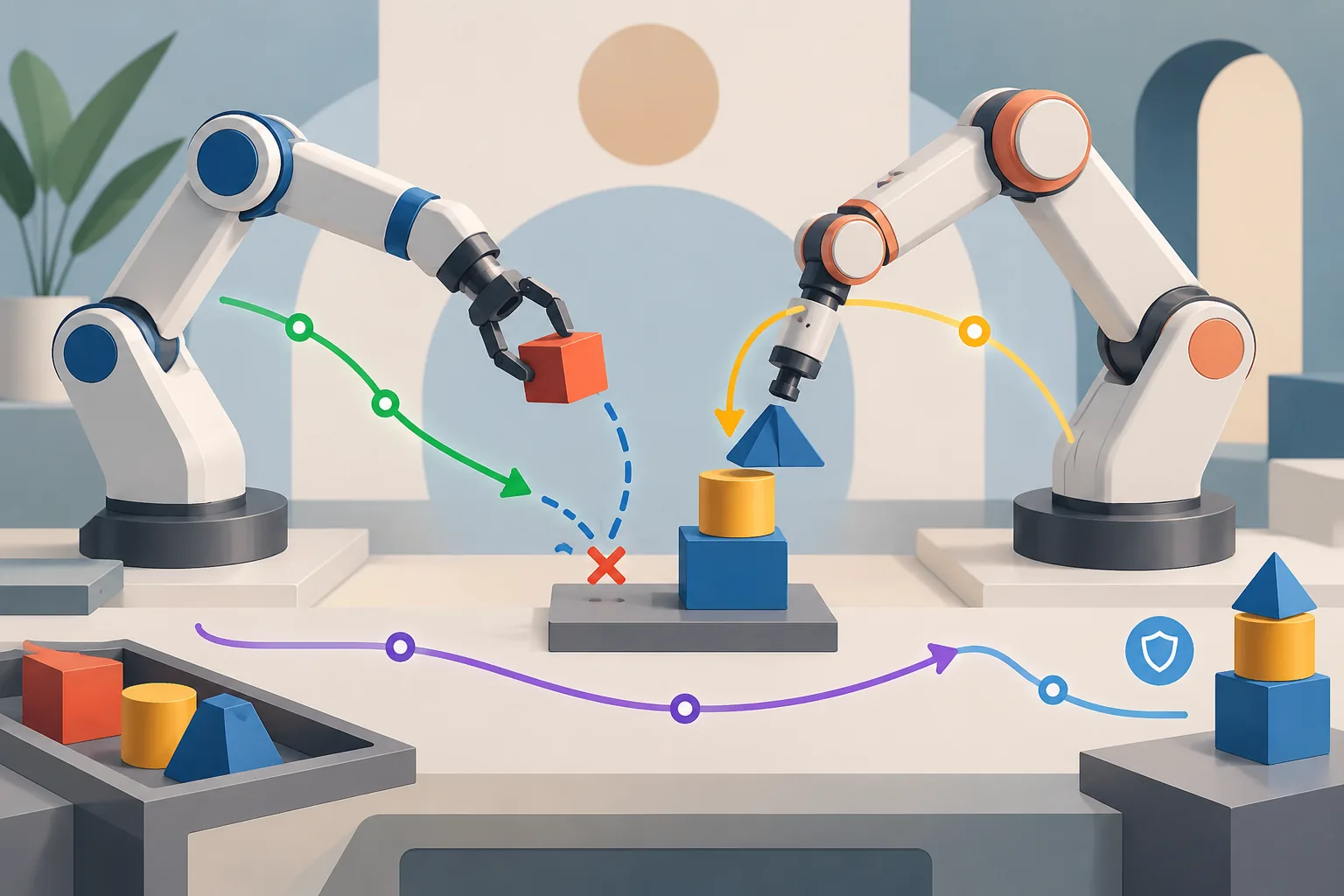
Diagnosing Bimanual Robot Failures Stage by Stage
Stage-level evaluation can show when and how a bimanual policy breaks down, separating alignment, slipping, coordination, arm-use asymmetry, efficiency and safety problems that binary success can conceal.
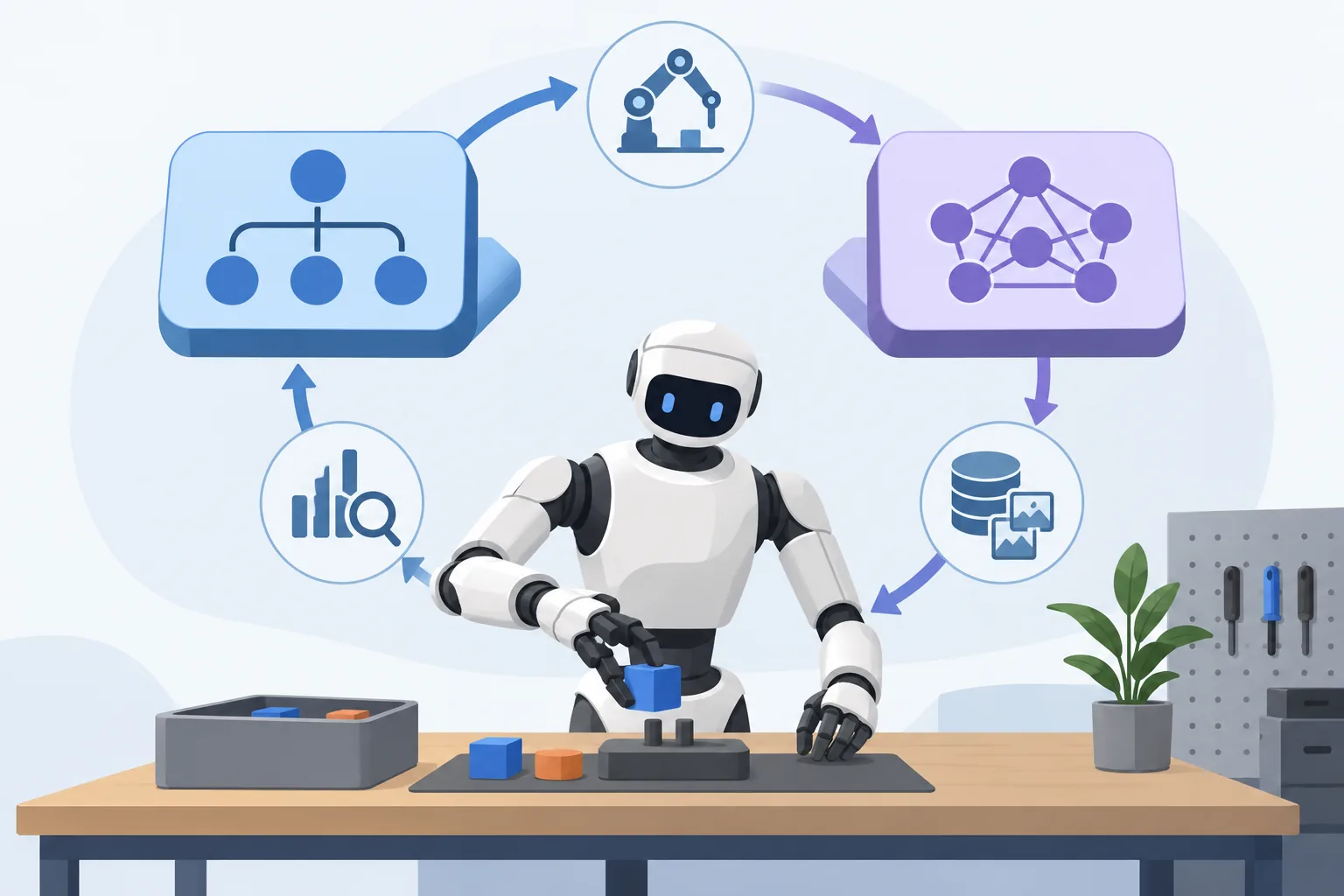
One Learning Loop for Robot Orchestration and Action
Robo-COP proposes a shared improvement cycle in which deployment executions provide demonstrations, recurring failures guide policy fine-tuning, and revised skills must pass verification before the new policy is adopted. Its authors report gains on ten simulated tasks and three physical tasks.