The library
Articles

How Diffusion Policies Can Preserve Distinct Action Modes
Independent action-noise pairing can mix diffusion paths and produce averaged denoising responses that suppress distinct demonstrated behaviors. A label-free training add-on instead assigns noise to actions to preserve relatively separate routes without changing architecture or inference, although the reported results come from one preprint.
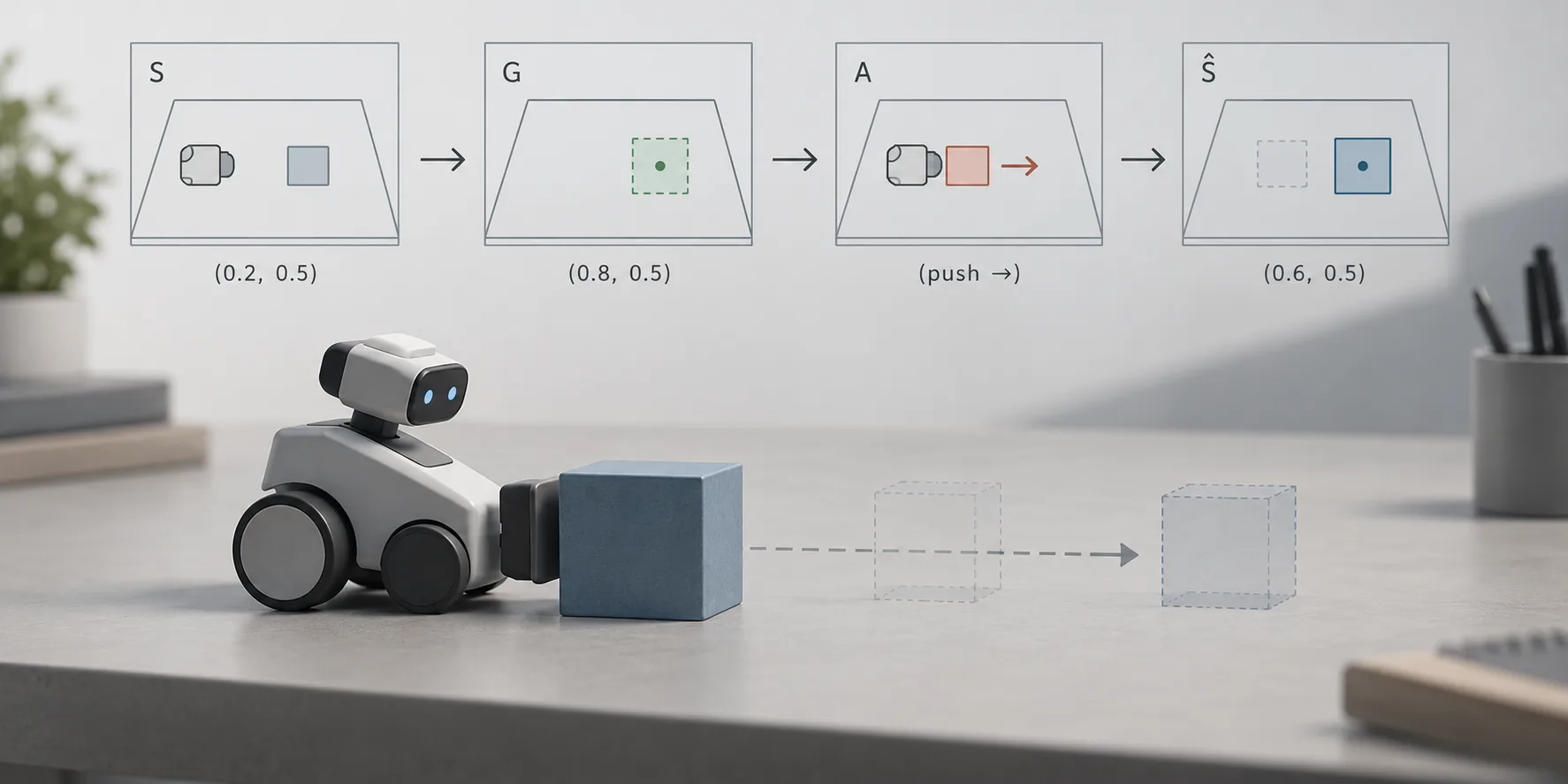
A Shared Spatial Vocabulary Lets One Robot Model Act and Forecast
A preprint proposes encoding scene contours, goals, action targets and future states as spatial sequences, then training one autoregressive Transformer for both action generation and action-conditioned forecasting. Its simulation and real-robot results are author-reported.

Train Robots Where the Challenge Is Just Right
Success Guided Sampling prioritizes simulated task configurations around the boundary of a robot policy’s current abilities. The abstract reports that the method solved locomotion and assembly tasks that prior methods failed to solve and that distilled RGB-based policies transferred zero-shot to assembly tasks on real hardware.
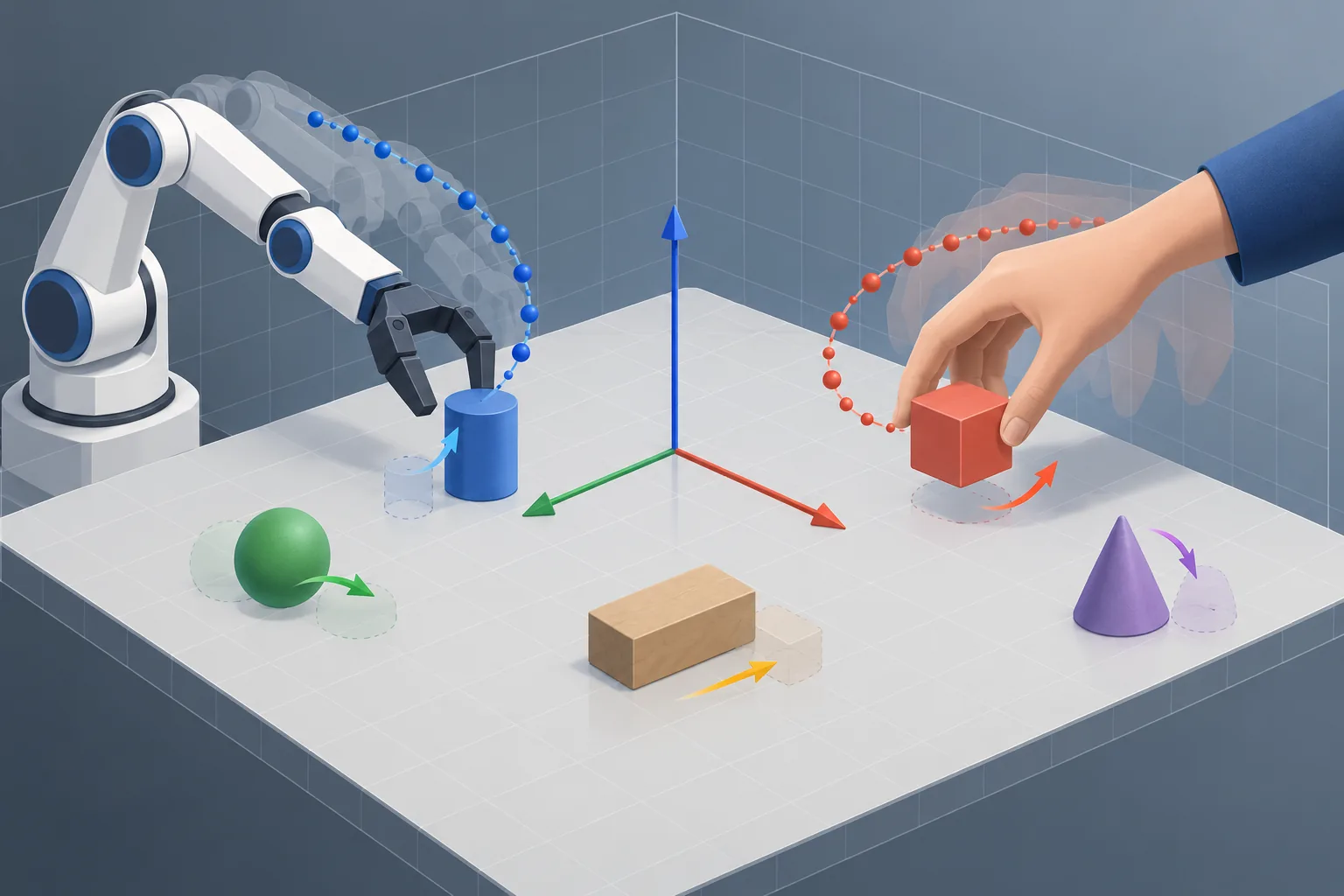
UNITAS Joins Robot Motion and Scene Dynamics in a Shared 3D Frame
Both occupy a shared metric frame, allowing one model interface to produce executable actions and action-conditioned forecasts of physical change.
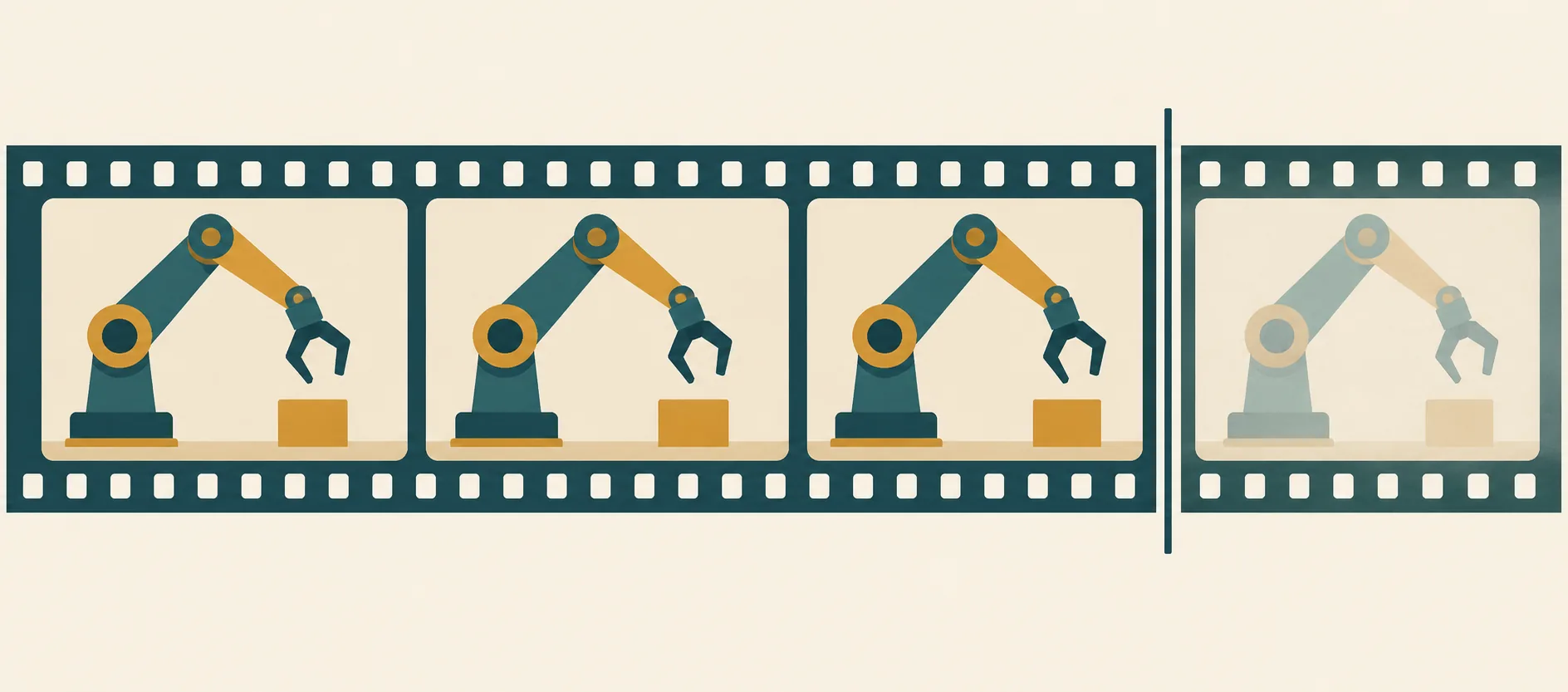
What Happens to a Training Sequence at an Episode’s Edge?
A loader can complete a requested window near an episode’s end by repeating the final frame as padding. That repetition differs from both newly recorded steps and the earlier context supplied through frame stacking.

Anatomy of a Robot Demonstration Dataset
A robot demonstration dataset can align images and other observations with recorded actions, organize them into trajectories, and supply schemas, task or environment context, statistics and subset labels. These files are inputs to learning algorithms, not learned policies themselves, and the presence of rewards or termination signals alone does not independently confirm successful task completion.