The library
Articles
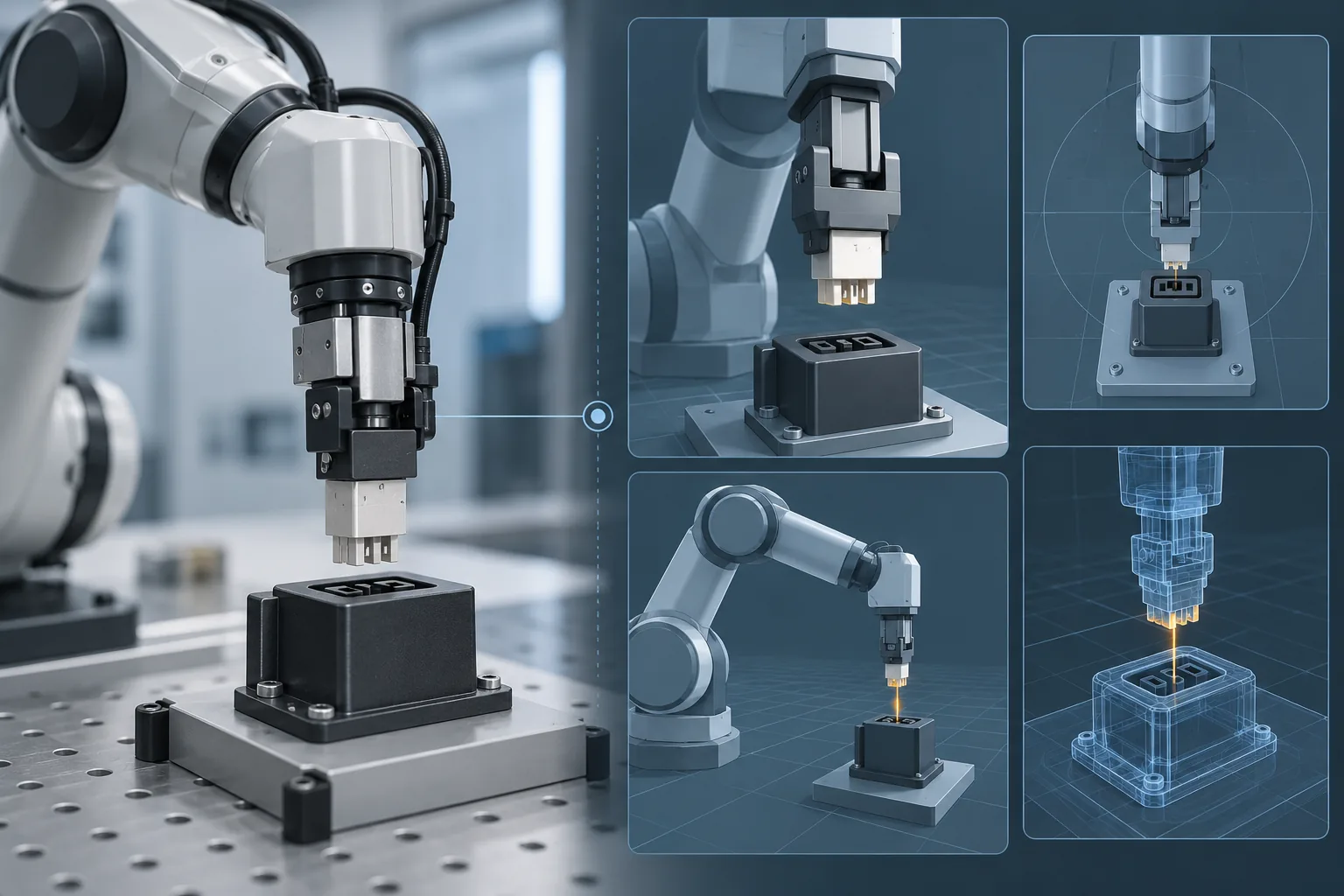
Virtual Views Give Frozen Robot Policies a Better Angle on Precision
SpatialHarness synchronizes a simulated scene with real robot execution and renders complementary perspectives for a frozen multimodal policy. Its authors report gains on four physical manipulation tasks, including plug insertion and Tower of Hanoi.

How PLaW-VLA Turns Latent Forecasts Into Robot Actions
PLaW-VLA predicts task-relevant futures in a pretrained latent representation and conditions action generation on them through structured causal attention. Its authors report benchmark gains and lower latency than generative world-action modeling.
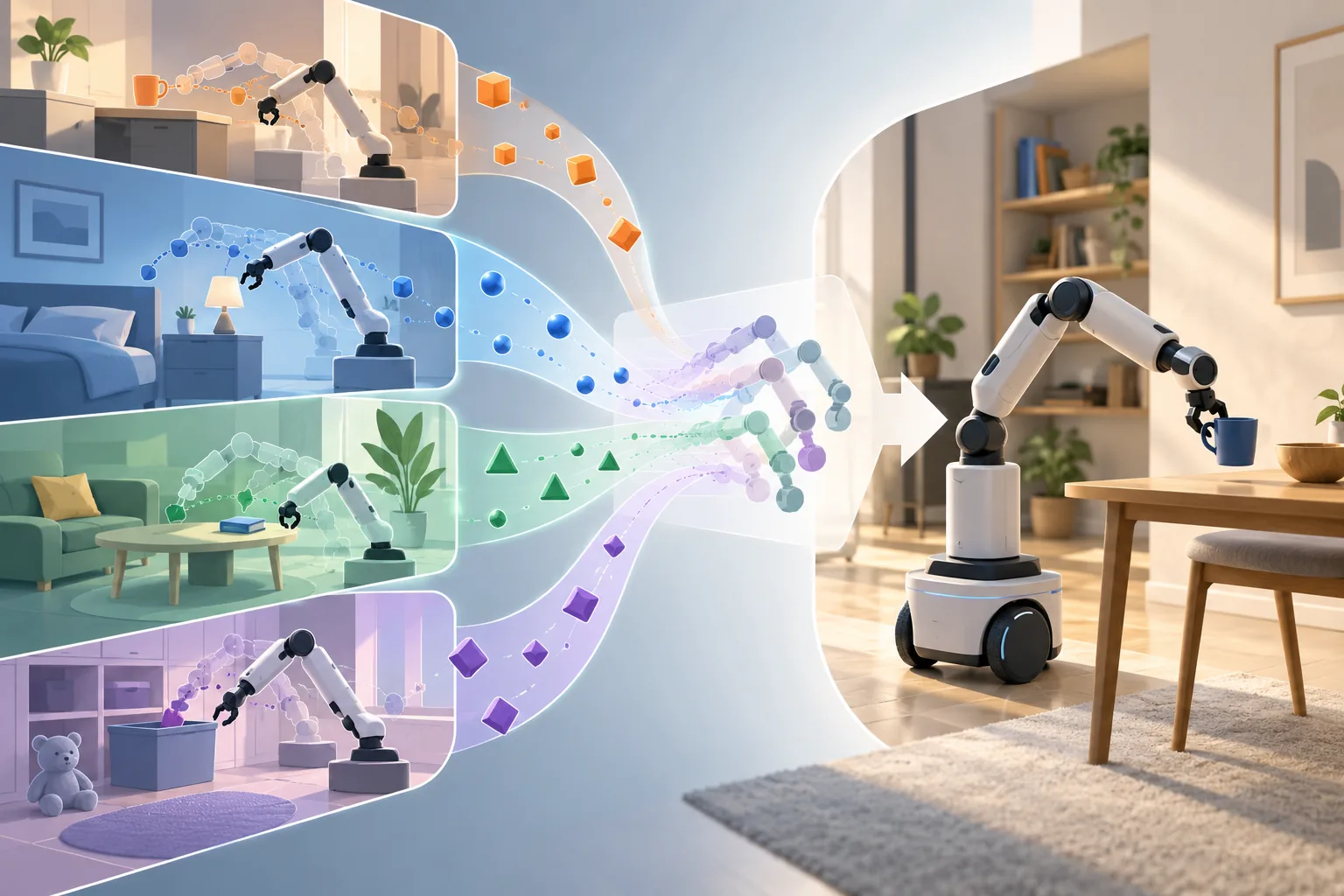
Inside SimVLA’s Simulation-Only Route to Mobile Manipulation
SimVLA uses synthetic action data and simulator-derived visual-language supervision for pre-training, then adds simulated policy rollouts during post-training. Its authors report zero-shot transfer to real mobile-manipulation tasks, but the available abstract does not provide detailed results or independent validation.
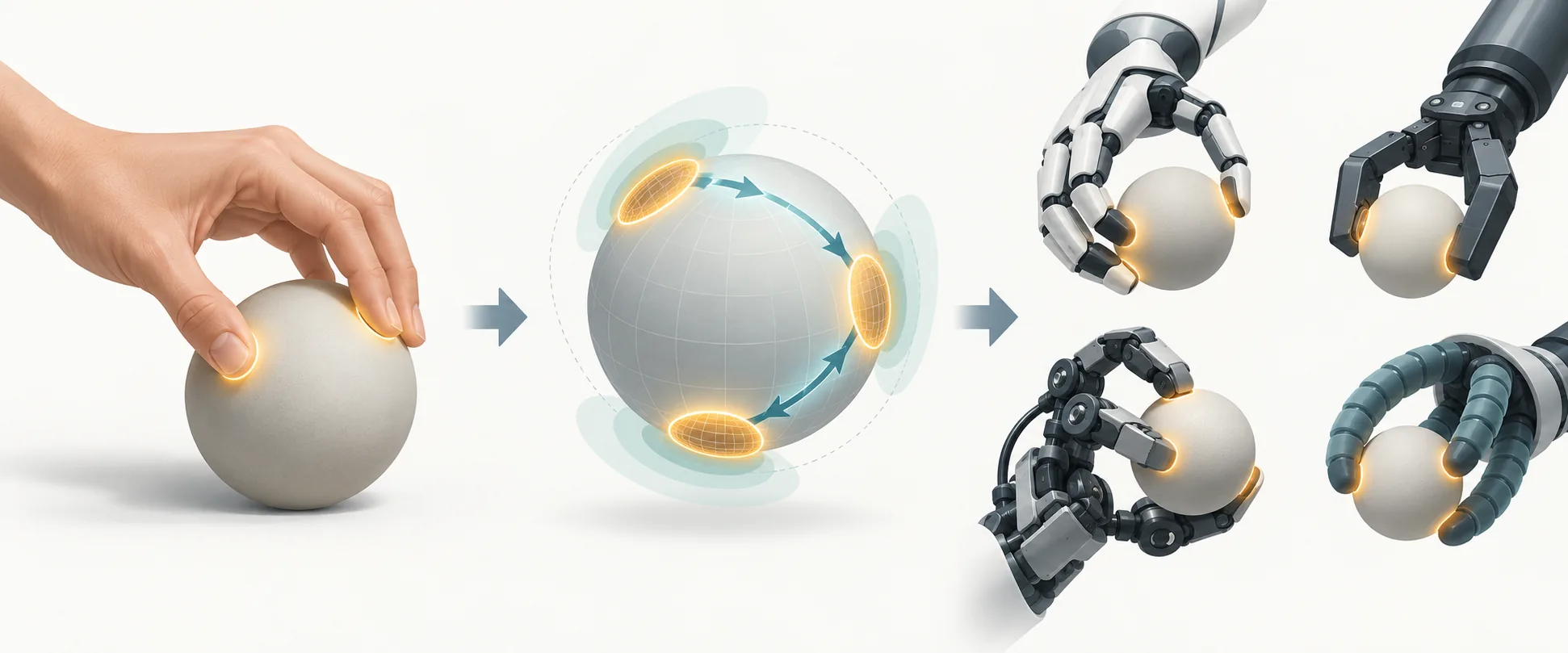
Retarget the Contacts, Not the Human Hand Motion
The method preserves where and when fingers contact an object instead of copying human joint motion directly. Its authors combine simulated physics refinement, morphology-independent contact retargeting and residual policy learning, then report deployment on four physical bimanual tasks without real-robot training data.
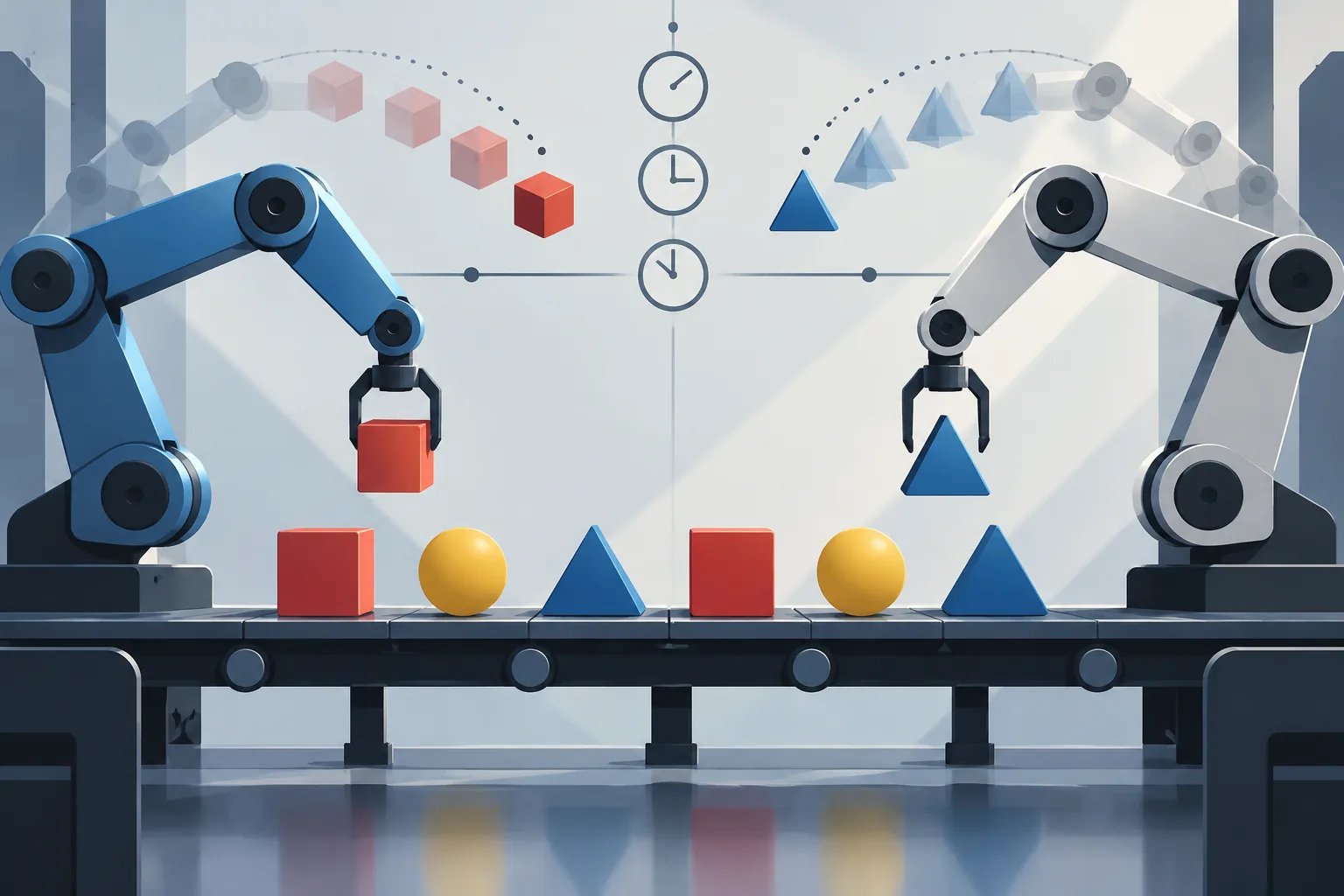
A Fair Test of Dual-Arm Skill Recomposition
A dual-arm benchmark can probe recomposition by testing unseen combinations of familiar per-arm skills, enforcing order and timing requirements, and comparing policies under shared data and evaluation conditions.

Who checks the model that judges a robot's success?
A guide to checking a robot success detector, using AutoEval and a separate study of visual changes.