Learning methods
Virtual Views Give Frozen Robot Policies a Better Angle on Precision
SpatialHarness keeps a virtual scene aligned with a physical robot, then exposes otherwise hard-to-see geometry to a frozen multimodal control model.
Fine manipulation can fail when a camera does not clearly show the geometric relationship that matters, even if the control policy may be capable of acting on that information.
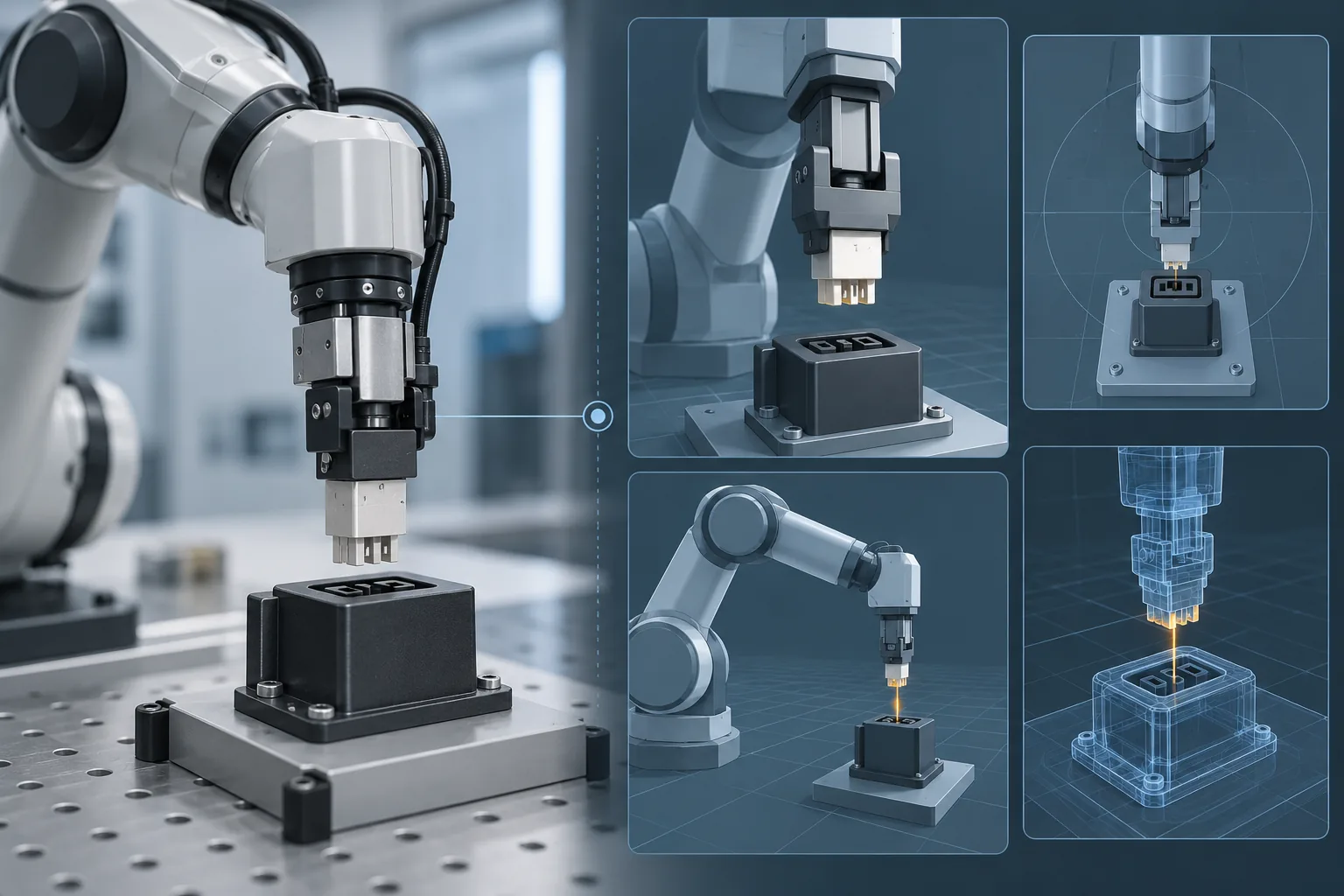
Virtual viewpoints can help a robot perform precise manipulation by revealing task-critical spatial relationships to an unchanged policy while a synchronized simulation tracks the physical interaction. SpatialHarness identifies those relationships in its online simulated scene, renders complementary views, and supplies them to a frozen multimodal foundation model without fine-tuning the policy or changing the physical sensing setup.
Keeping the virtual scene aligned with the real one is central to the method. The authors describe interaction-aware synchronization that distinguishes among static objects, objects held by the robot, and transitions between those states, allowing the rendered perspectives to follow changes during manipulation.
The preprint reports an evaluation on four physical-robot tasks covering precise geometric alignment, object-relative placement, and interaction with articulated objects. With the same frozen GPT-6 Astra policy, the authors report that plug-insertion success rose from 26.7% to 66.7%, while Tower of Hanoi success increased from 0% to 100%. Because the admitted evidence consists of the authors’ abstract from a single preprint, these figures are reported results rather than independent confirmation. Within that limit, the study suggests that better test-time views can expose spatial information a capable policy needs without retraining it.