Embodied AI models
ROMA’s Authors Propose an Active Perception Loop
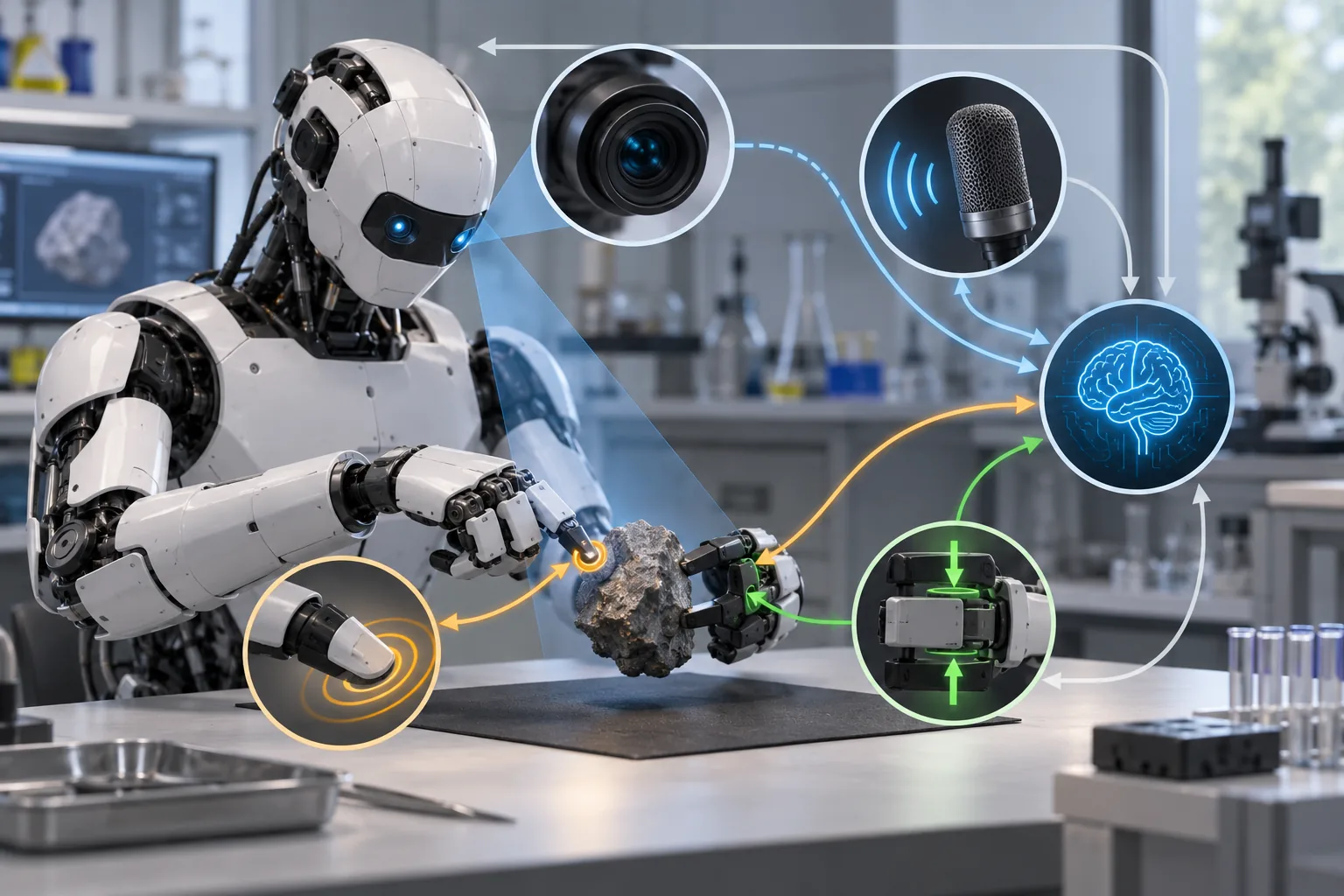
ROMA is designed to move beyond passive sensor fusion by connecting model-directed object interactions to vision, audio, touch and force feedback.
ROMA is a proposed active-perception system that identifies an evidence gap, chooses what object to test and how to test it, then incorporates newly collected multisensory feedback into its reasoning loop. Its physical interface executes the selected interactions and collects the feedback, according to the authors.
The authors say existing multisensory robot systems mainly integrate sensory inputs instead of actively acquiring missing evidence through interactions. They describe ROMI-2K as a real-world dataset covering nearly 2,000 objects and 6 atomic interactions with synchronized sensory feedback. These details come from a truncated RSS abstract, so the available evidence supports an explanation of the proposed mechanism but not an assessment of its training procedure or performance. The mechanism and dataset description remain claims by the authors rather than independent confirmation.